
Solar inverter procurement in 2026 is no longer a simple price comparison. A low unit price may look attractive in a spreadsheet, but project buyers usually pay for much more than the inverter itself. Installation labor, battery matching, maintenance, downtime, spare parts, warranty pressure, and future expansion can all change the real inverter cost over time.
For B2B procurement teams, EPC contractors, distributors, and project developers, total cost of ownership gives a more realistic way to compare different solar inverter options. The question is not only which model costs less today. The more useful question is which model supports stable operation, lower service pressure, and better long-term project value.
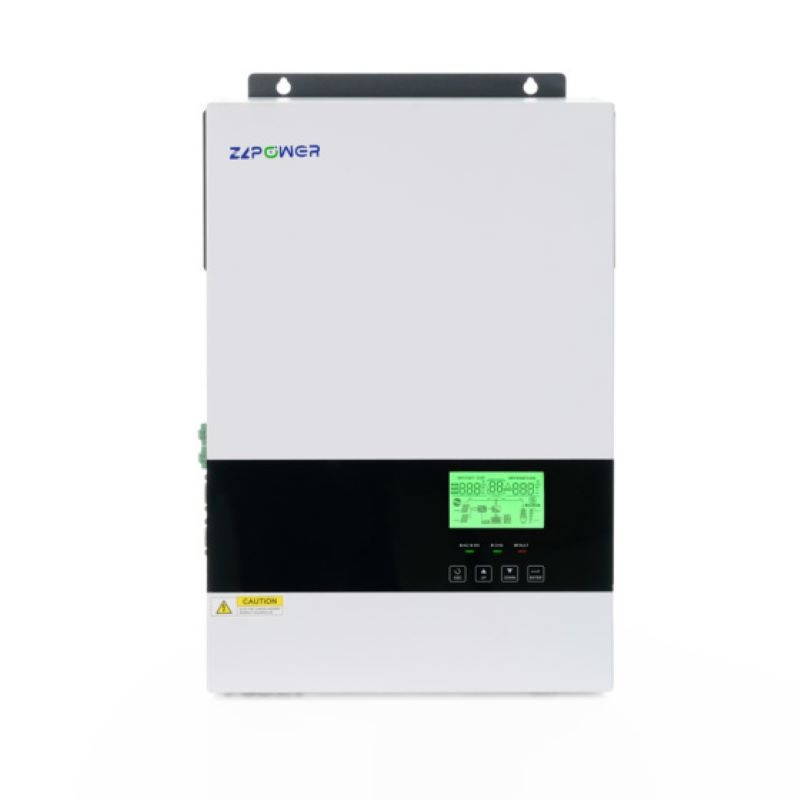
ZLPOWER solar inverters are used in different commercial and off-grid power settings, including farms, telecom sites, small factories, warehouses, villas, and remote backup systems. A proper TCO analysis helps match the right product series with the right application, instead of treating every project as the same job.
A lower-priced solar inverter may appear attractive in tender documents. Yet such units can struggle with real load changes or grid instability. A mismatch between inverter design and actual site conditions often raises service calls, shortens battery life, or forces expensive redesigns later.
Distributors who handle many installations value stable cost patterns. These patterns support accurate forecasts for warranty work, spare parts stock, and support planning. TCO analysis supplies that broader view instead of a narrow focus on unit price alone.
This stage covers purchase price, taxes, packaging, and shipping. Bulk orders and standard models reduce per-unit expense while easing logistics.
Labor time depends heavily on design features. Units with LCD interfaces and flexible setup options cut technician hours during commissioning.
Even small efficiency gaps of 1–2 percent add up over thousands of operating hours each year. A hybrid inverter with pure sine wave output limits energy loss on sensitive loads such as telecom gear or industrial controls.
Maintenance includes inspection, cleaning, troubleshooting, firmware or setting review, replacement parts, and technician labor. In clean indoor rooms, this may be manageable. In dusty, hot, humid, or remote locations, service cost can rise fast.
Monitoring access and fault records can reduce unnecessary site visits. A maintenance team with system data can identify battery mismatch, overload events, low input voltage, or temperature problems faster than a team working from guesswork.
Downtime quickly multiplies financial losses, especially at sites that need steady power such as cold storage warehouses or telecommunications towers. An unstable inverter can stop operations until repairs finish.
Battery life depends on charging control accuracy. The GSII series fully supports LiFePO₄ batteries (even without communication protocols), AGM, GEL, and deep-cycle batteries. Models that handle multiple battery types add flexibility for future upgrades without a full system swap. This flexibility brings another long-term saving in TCO.
The PVM Series can fit small and mid-size commercial solar power systems where flexible settings and easy operation matter. Pure sine wave output, MPPT charging, and user-friendly setting options can reduce commissioning difficulty for technicians.
This type of product is suitable for distributors serving shops, small offices, backup systems, and compact off-grid projects. The TCO value comes from easier setup, practical capacity options, and lower service confusion after delivery.
The PVG Series is useful for field projects that need stable solar charging and off-grid performance. Built-in MPPT charging helps regulate solar input for battery charging. Its battery-independent design also gives more flexibility in some application settings.
For farms, outdoor work sites, small industrial rooms, and remote facilities, PVG can support a cost structure that focuses on durability, charging stability, and simpler daily operation.
The PVX Series supports dual-output load management, which is important for projects that need to separate critical and non-critical loads. This feature can lower downtime risk for security systems, telecom devices, control equipment, emergency lighting, and other priority equipment.
In TCO terms, this is not just a technical feature. It helps protect the most important loads when battery capacity is limited or solar input drops. That can reduce business interruption cost.
The GSII Series fits larger hybrid applications such as farms, villas, small factories, and commercial backup systems. GSII 8KW-12KW split-phase models with built-in Wi-Fi for mobile monitoring can support projects that need broader power coordination.
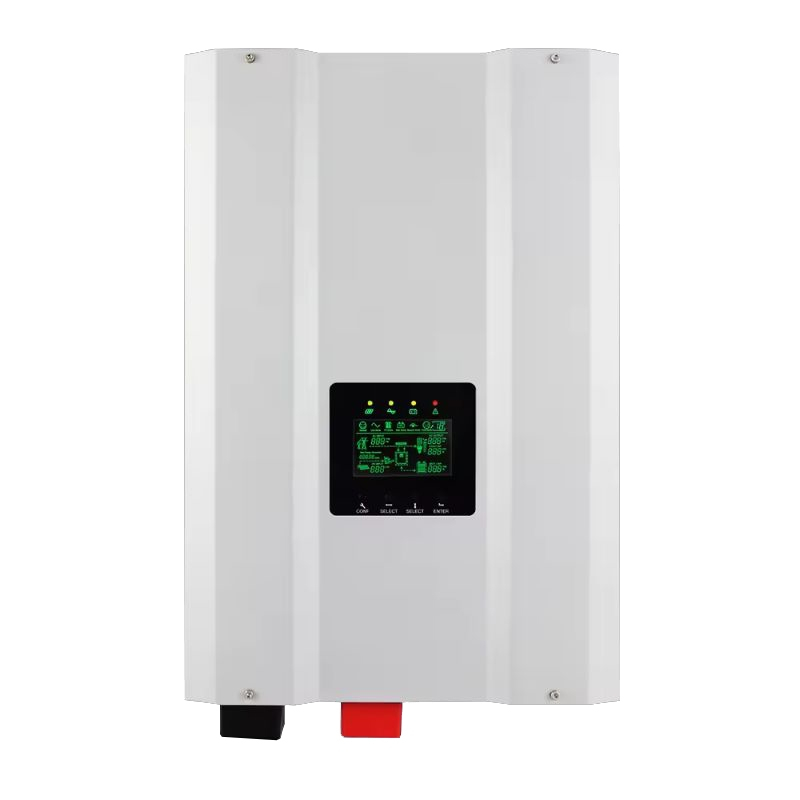
For project buyers planning future load growth, this type of inverter may reduce early replacement risk. The upfront investment may be higher, but the lifecycle cost can be more reasonable when capacity and monitoring needs are included from the beginning.
Teams should review total daily consumption and surge needs from motors or pumps before ordering any solar inverter. This step prevents undersizing that shortens unit life.
Different applications have different cost priorities.
|
Application |
Main Cost Concern |
Useful Product Direction |
|
Telecom site |
Uptime and battery stability |
Critical load planning |
|
Farm system |
Pump starting and dust exposure |
MPPT charging and rugged setup |
|
Warehouse |
Backup for mixed loads |
Stable output and load review |
|
Small factory |
Expansion and service control |
Higher-capacity hybrid inverter |
|
Remote office |
Simple maintenance |
Easy settings and monitoring |
This comparison helps procurement teams avoid a one-size-fits-all selection.
Remote sites increase response times. Self-diagnostic features become valuable when technicians must travel hours to reach the location.
Scalable hybrid systems avoid early replacements when load demand grows past the original plan.
Downtime cost should use revenue loss figures rather than repair bills alone. Separating critical loads lowers exposure during failures.
Two solar inverters with the same rated power may perform differently under surge load, heat, battery conditions, or mixed commercial loads. A basic price table cannot show the full picture.
Maintenance may look small at the start. Later, it can become a major cost, especially in dusty or remote sites. Cleaning, inspection, cable checks, and troubleshooting should be included in the TCO model.
Downtime should be calculated based on business impact. For critical projects, one outage may cost more than several routine inspections.
Battery behavior and inverter settings are closely connected. When charging settings are wrong, battery replacement may come earlier than expected. That cost belongs in the TCO calculation.
Sales teams often meet customers who focus only on upfront pricing. Introducing TCO shifts attention toward lifecycle value. Fewer returns and lower warranty claims improve margins over time.
PVM fits compact systems. PVG supports field projects. PVX handles mission-critical sites. GSII powers industrial-grade hybrids. Correct mapping of these options raises conversion rates.
Detailed proposals that show expected energy yield, maintenance schedule, and battery pairing strategy give distributors an edge over competitors who supply only spreadsheets of numbers.
Solar inverter TCO analysis gives B2B procurement teams a more practical view of project cost in 2026. The real cost includes the unit price, installation effort, energy performance, maintenance needs, downtime risk, battery compatibility, and future expansion.
ZLPOWER solar inverters cover different project needs through PVM, PVG, PVX, GSII, and related product options, helping distributors, EPC contractors, and project buyers select models based on application conditions rather than price alone.
For commercial solar power projects that require stable performance and controlled lifecycle cost, contact ZLPOWER for inverter model selection and project-based procurement support.
It covers purchase price, shipping fees, installation labor, efficiency losses over time, maintenance visits, downtime risk assessment, spare parts availability, battery compatibility impact on lifespan, and possible expansion costs later on.
Unit price hides long-term expenses such as service frequency or lost production during outages. Two models that look identical on paper may perform differently once installed under real field conditions.
The PVX line manages dual outputs so essential equipment stays powered even if secondary circuits trip offline.
Matching charging profiles correctly prevents premature aging. Models that support lithium-ion alongside AGM or GEL types give flexibility when upgrading storage systems later.
Distributors can use TCO analysis to compare long-term value, explain maintenance and downtime costs, recommend the right ZLPOWER model by application, and build more professional project quotations.
 ChatNow
 Vania
Vania