
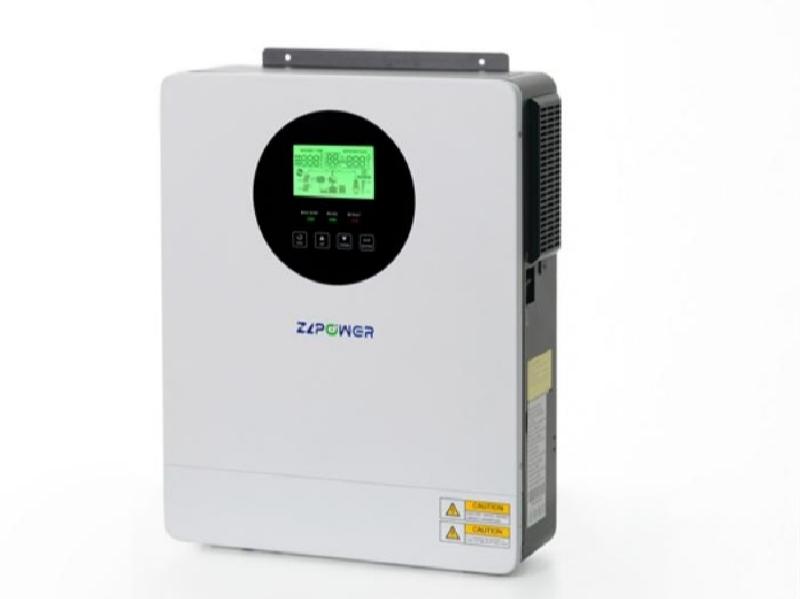
That’s why more business owners choose pure sine wave inverters. This article explains exactly what they are, why they matter for real work, and how to pick the right one.
It’s a box that takes DC power from batteries or solar panels and turns it into the same clean AC power you get from the wall socket at home or in the factory – smooth 220-240 V or 120 V, 50 or 60 Hz.
Cheap inverters make a rough, blocky wave. Pure sine wave units make a perfect, smooth wave. That smooth wave is the only kind that plays nice with modern motors, controllers, computers, and medical gear.
1. It grabs DC power from your batteries or solar controller.
2. Tiny switches inside flip the power on and off thousands of times a second.
3. Special filters clean up the mess and leave a perfect sine wave.
4. Smart electronics lock the voltage and frequency exactly where they need to be.
Good ones waste only 5-10 % of the power. Many now come with a built-in MPPT solar charger so you squeeze every watt out of your panels.
|
|
Pure Sine Wave |
Modified Sine Wave |
|
Wave shape |
Smooth, like the grid |
Blocky, rough |
|
Runs sensitive equipment |
Yes, no problem |
Often buzzes or breaks |
|
Efficiency |
90-95 % |
Usually lower |
|
Heat and noise |
Almost none |
Noticeable |
|
Price |
Higher |
Cheaper |
|
Best for |
Real business gear |
Lights and simple tools |
Run any industrial gear without worry – PLCs, VFDs, servers, LED lights, everything with a reliable industrial pure sine wave inverter.
· Save money on fuel or solar because almost no power is wasted.
· Your machines last longer and break less often.
· All ZLPOWER units carry CE, UL, ETL, ISO9001, ISO14001 – accepted everywhere you export.
1. Add up everything that will run at the same time (continuous watts).
2. Find the biggest startup surge (motors can pull 3× their running watts).
3. Buy 20-30 % bigger than you calculated.
4. Match the battery voltage – 24 V or 48 V is common for bigger systems.
5. Look for at least 90 % efficiency and low standby use.
6. Make sure it handles wide solar voltage (120-450 V is ideal).
7. Check for real protection: dust-proof case, wide temperature range, remote monitoring, and a long warranty.
· Remote factories and warehouses
· Large farms – pumps, dryers, greenhouse fans
· Mining camps and oil-field sites
· Cell towers and weather stations
· Off-grid cold storage and refrigerated trucks
· Construction sites and temporary offices
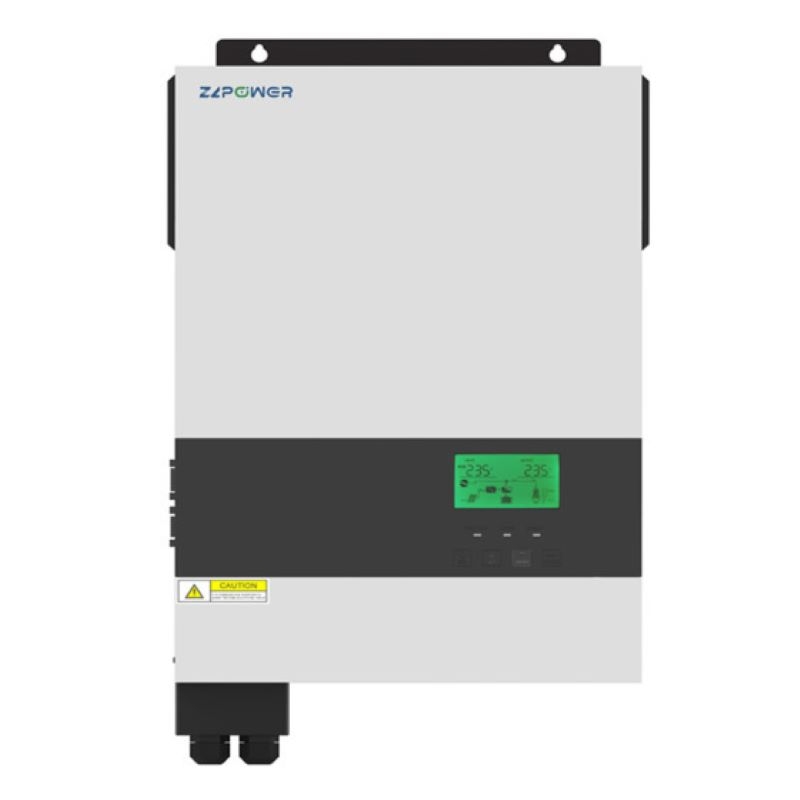
If your business runs without the grid, a proper off-grid inverter is not a luxury – it’s a must. Going cheap with modified wave units usually costs you more in broken equipment and lost production.
Need the right size for your project? Drop us a message. We’ll size the system and send you the newest 2025 catalog – no charge.
A: You can for simple lights or heaters. Anything with electronics or a motor will run hot, buzz, and die early. Most companies regret the “cheap” choice within a year.
A: Yes. A good 10 kW pure sine unit can deliver 20-30 kW for several seconds – plenty for most industrial startups.
A: Add all continuous loads. Include the largest startup surge. Then choose an inverter 20–30 % larger. Example: 15 kW running + 25 kW surge → select a 20–25 kW unit on a 48 V system.
A: Absolutely. Current models take 120-450 V from panels, have big built-in MPPT chargers, and talk to any lithium or AGM bank without extra boxes.
 ChatNow
 Vania
Vania