
Solar inverter selection in commercial projects is no longer a simple cost comparison. For many EPC contractors, distributors, and system integrators, the real decision is whether to start a project with a solar inverter without battery or move directly to a battery-ready hybrid inverter.
This choice affects system cost, upgrade flexibility, and long-term energy planning. In real applications, different sites behave differently. A warehouse may only need daytime solar support, while a telecom site or clinic requires backup power without interruption.
ZLPOWER, founded in 2007, supplies UPS power, power inverter, solar inverter, EPS power supply, energy storage power, and related solutions. Its product range supports off-grid, hybrid, and backup power applications, making the brand relevant for B2B buyers comparing battery-free startup with future battery expansion.
According to IEA forecasts, solar PV will continue to lead global renewable capacity growth through 2030. At the same time, battery storage reached 108GW of new installations in 2025, reflecting strong demand for hybrid solar-storage systems in commercial energy planning.
This shift is directly influencing how buyers evaluate hybrid inverter price and system design. Solar is no longer only about generation. It is increasingly linked with backup capability, load stability, and future energy storage integration.
Many commercial buyers still prefer phased investment. A project may begin with PV and inverter installation, while battery storage is added later based on load confirmation or budget planning.
This is where battery-ready inverter design becomes practical. It supports staged deployment without redesigning the entire system.
A solar inverter without battery can run loads without a connected battery if the inverter supports battery-independent operation and site conditions are suitable. It can be a good match for projects where most loads operate during daylight hours.
Common use cases include:
· Farm buildings and irrigation support
· Daytime workshops and tool rooms
· Retail stores with grid support
· Warehouses with non-critical daytime loads
· Pilot solar systems before battery investment
· Remote service points with limited first-stage budget
Since batteries often take a large share of off-grid system cost, battery-free startup helps distributors offer an entry-level solution for price-sensitive markets.
Battery-free operation should not be treated as full backup power. Without storage, system output depends on PV generation, grid condition, and load behavior. A cloudy afternoon may not affect lighting, but sensitive electronics can react differently.
Before selecting a solar inverter without battery, the project should be checked against:
· Daytime and nighttime load demand
· Grid stability
· PV array size
· Motor startup current
· Critical load requirements
· Future battery plan
Cost control only works when the inverter still matches the site load profile and future expansion plan.
A battery-ready hybrid inverter manages PV input, grid or generator input, battery charging, and AC output in one system. Its stronger value lies in upgrade flexibility.
A project may begin without batteries, then add storage later for backup power, better solar self-consumption, lower diesel generator runtime, or nighttime load support. In remote sites, reducing generator runtime can lower fuel logistics, maintenance frequency, and site-level emissions.
Some inverters can connect to batteries, but that does not automatically make them easy to expand. For B2B procurement, a battery-ready hybrid inverter should be checked for battery voltage, charging current, battery chemistry, communication ports, charging priority, and backup behavior.
The problem often appears during the second-stage battery installation. If that phase requires extra chargers, rewiring, or inverter replacement, a cheaper purchase may increase the total project cost.
|
Factor |
Solar Inverter Without Battery |
Battery-Ready Hybrid Inverter |
|
Initial investment |
Lower system entry cost |
Higher initial configuration cost |
|
Best application |
Daytime loads, grid-supported sites |
Backup systems, unstable grid environments |
|
Expansion flexibility |
Limited by system design |
Designed for battery integration |
|
Commercial value |
Entry-level solar solution |
Long-term scalable energy system |
In most B2B solar projects, the decision is not about choosing the cheapest system, but selecting a structure that supports future upgrade flexibility.
Based on ZLPOWER product specifications, different inverter series are designed for phased solar deployment and commercial energy applications.
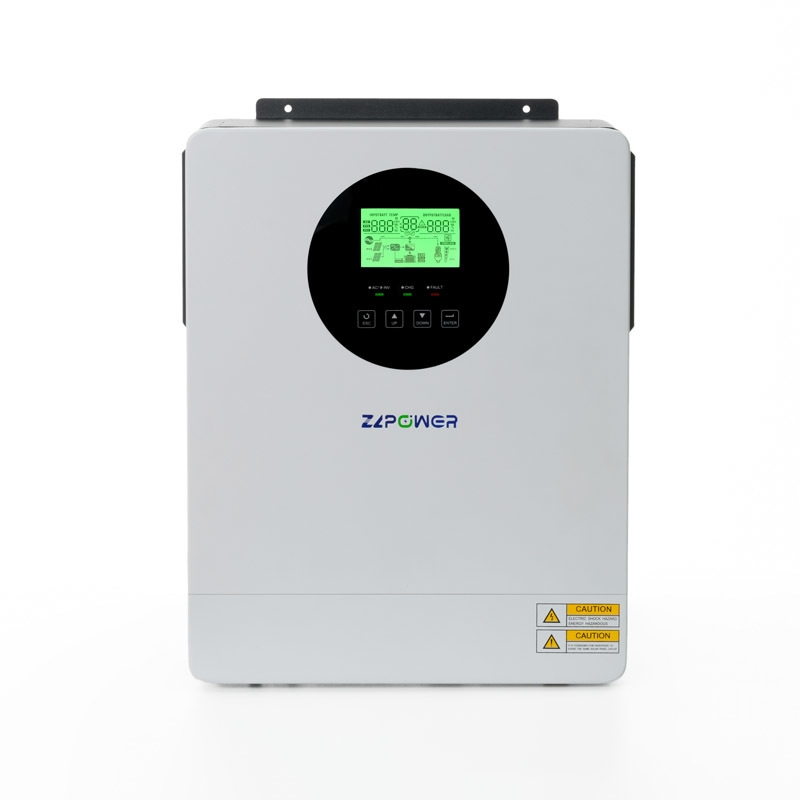
ZLPOWER PVG high frequency solar inverter supports battery-independent operation and is commonly used in phased solar installations. It features high PV input range, MPPT solar charging, and system adaptability for off-grid environments.
This makes it suitable for projects that start without battery storage and later expand into hybrid energy systems.
The PVX series off-grid hybrid inverter is designed for applications requiring load prioritization. It supports dual output, allowing separation of critical and non-critical loads in commercial environments such as clinics, workshops, and small factories.
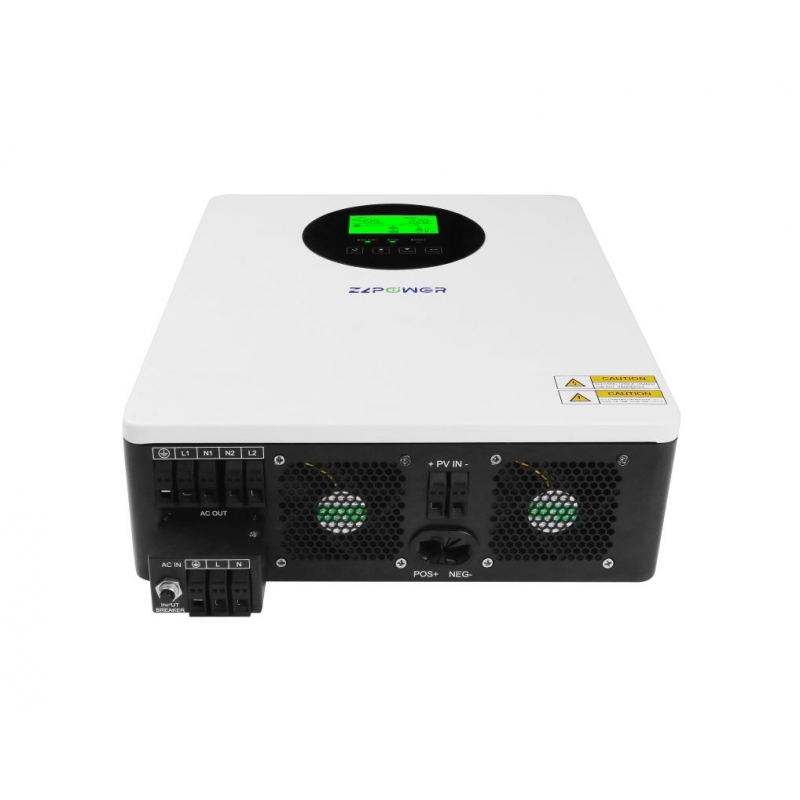
PVM Plus supports parallel operation and is suitable for scalable off-grid energy systems. It is often selected in projects requiring future capacity expansion or distributed energy planning.
A proper inverter selection should include both present load and future expansion. Rated power and unit price matter, but they are not enough.
|
Procurement Check |
Why It Matters |
|
Battery independent design |
Allows operation without battery in phased projects |
|
MPPT charging capacity |
Affects PV harvest and battery charging speed |
|
PV input voltage range |
Impacts solar array design |
|
Battery chemistry support |
Reduces future storage compatibility risk |
|
Charging priority settings |
Helps manage solar, grid, and battery use |
|
Dual output |
Helps protect critical loads |
|
Parallel operation |
Supports future capacity growth |
A short load list can prevent expensive mistakes. Motors, pumps, refrigerators, computers, and medical devices behave differently at startup. Sensitive electronics need stable output, while motor loads may need higher surge capacity.
This configuration is suitable for projects where:
· Energy demand is concentrated during daytime
· Grid support is available
· Budget is allocated in phases
· Battery installation is planned for a later stage
This configuration is more suitable when:
· Backup power is required
· Grid supply is unstable
· Future battery integration is expected
· Commercial continuity is critical
A solar inverter without battery can be a smart starting point for daytime commercial loads and phased investment plans. A battery-ready hybrid inverter adds long-term value by keeping future storage, backup power, and load growth open.
For B2B buyers, the better decision should be based on site load, grid stability, expansion plans, and total project cost, not only the first invoice. ZLPOWER provides solar inverter and hybrid inverter solutions designed for phased commercial deployment, helping distributors, EPC contractors, and project developers match system configuration with real site conditions, PV design, and future battery expansion plans.
For technical selection support, project-based quotation, or commercial solar inverter solution design, ZLPOWER can assist in matching the appropriate system architecture based on load profile and application requirements.
Q1: Can a commercial solar inverter work without battery?
A: Yes. Some commercial solar inverter models support battery-independent operation. ZLPOWER PVG, PVX, and PVM Plus models include battery independent design for projects that may start without a battery.
Q2: When should a B2B buyer choose a battery-ready hybrid inverter?
A: A battery-ready hybrid inverter is usually better when the site has unstable grid supply, critical loads, future storage plans, or a need to reduce generator use.
Q3: Is an off grid inverter suitable for commercial projects?
A: Yes. An off grid inverter can be used in farms, workshops, remote facilities, telecom rooms, and small commercial sites, as long as the capacity and load profile are properly matched.
Q4: What is the benefit of dual output in a hybrid inverter?
A: Dual output helps separate important and unimportant loads. This allows critical equipment to receive priority when solar, battery, or grid power is limited.
Q5: What should be checked before adding batteries to a ZLPOWER hybrid inverter later?
A: Battery voltage, battery chemistry, MPPT charging current, PV input voltage range, communication ports, and charging priority settings should be reviewed according to the selected ZLPOWER model.
 ChatNow
 Vania
Vania