
Commercial off-grid projects rarely operate with a flat, predictable load. A farm may run irrigation pumps in the morning, refrigeration throughout the day, and workshop tools only when maintenance work begins. Remote clinics, telecom sites, construction camps, and small factories face similar changes.
Solar panels and batteries can cover much of the daily energy demand, but a generator may still be required during extended bad weather, maintenance, or sudden load peaks. For a 2026 procurement review, the important question is not simply whether an inverter brochure mentions generator input. Buyers need to know how the inverter, generator, battery bank, PV array, loads, and control sequence will work together.
A properly selected hybrid solar inverter can reduce unnecessary generator runtime and manage battery charging more effectively. Poorly matched equipment, however, may cause unstable transfers, failed motor starts, or repeated site visits. This guide explains what EPC contractors, distributors, system integrators, and commercial buyers should check before selecting a solar inverter manufacturer.
A solar inverter with generator input can receive power from an approved AC source. Depending on the model and system design, generator power may support the loads, charge the batteries, or perform both functions at once.
The connection method varies. Some inverters use one AC input for either utility or generator power. Other systems require additional relays, controllers, or transfer equipment.
Matching the nominal voltage is only the first check.
A generator and inverter may both be rated at 230 V and 50 Hz, yet the generator voltage or frequency can move when a compressor starts or the battery charger increases demand. If the output falls outside the inverter’s accepted AC-input range, the inverter may reject the source or repeatedly connect and disconnect.
Commercial buyers should compare:
· Generator voltage, frequency, and phase
· Voltage regulation and frequency stability
· Expected response to sudden load changes
· Inverter AC-input limits
· Neutral and grounding arrangement
· Required protection and switching equipment
When the inverter and generator come from different suppliers, request model-specific confirmation before issuing the purchase order.
A generator restart dry contact is a control interface. It sends a low-power start or stop signal to a compatible generator controller or external relay.
It does not carry the generator’s main AC power. A dry contact also does not prove that the generator output is electrically suitable for the inverter.
Before ordering, clarify:
· What condition triggers the start signal
· Whether an external controller is required
· How start and transfer delays are handled
· Whether minimum generator runtime can be set
· What condition stops the generator
· Whether warm-up and cool-down periods are required
Generator power acceptance and automatic start-stop control are separate technical requirements.
Begin with a load schedule rather than a preferred inverter capacity.
List each major device, its running power, operating time, and whether it may operate with other equipment. Pumps, compressors, refrigeration units, air conditioners, and motors need extra attention because their starting demand may be much higher than normal operating power.
The load schedule should include:
· Continuous operating load
· Maximum simultaneous load
· Motor starting-current data
· Starting method and surge duration
· Critical and non-critical circuits
· Planned future expansion
An off-grid inverter may carry the normal load without trouble and still trip when a pump and compressor start together. It may look like a small issue during design, but it can become an expensive service call after installation.
For a broader review of commercial load and capacity planning, see the ZLPOWER guide to selecting the right inverter capacity for B2B projects.
Do not select the generator by matching its rating to the inverter’s rated output.
When the generator is running, it may supply the active loads and charge the batteries at the same time. Consider a simplified workshop example:
|
Power demand |
Approximate load |
|
Lighting and controls |
1 kW |
|
Workshop equipment |
4 kW |
|
Battery charging |
2 kW |
|
Steady demand before losses |
7 kW |
The generator already faces about 7 kW of steady demand. Motor-starting kVA, power factor, conversion losses, and environmental derating still need to be considered.
Adjustable AC charging current can help the commissioning engineer control charger demand when the generator is operating near its stable range. It is useful when large motors start during charging or when the generator also supplies equipment outside the inverter system.
Reducing charging current is not a substitute for correct generator sizing.
Generator output may be lower at high altitude or in high ambient temperatures. Installation ventilation, fuel quality, and operating duty can also affect available capacity.
Use the generator manufacturer’s derating chart for the actual site. A genset selected for a coastal project may not deliver the same usable output at a hot, high-altitude location.
The final generator size should reflect:
· Maximum site temperature
· Installation altitude
· Continuous and standby duty
· Largest expected load step
· Battery-charging demand
· Required future capacity
Before shipment, document the complete power architecture.
|
Project item |
Information to confirm |
|
Generator |
Model, kVA, voltage, frequency, and phase |
|
Inverter input |
Approved AC voltage and frequency range |
|
Loads |
Running kW, starting kVA, and start sequence |
|
Output |
Single-phase, split-phase, or three-phase |
|
Charging |
Maximum and adjustable AC charging current |
|
Control |
Manual start, dry contact, or external controller |
|
Site |
Temperature, altitude, and ventilation |
For split-phase systems, confirm both line-to-line and line-to-neutral voltage. Three-phase projects also require phase-sequence, load-balance, neutral, and grounding checks.
A phase or voltage mismatch discovered after delivery may require different switchgear, a transformer, rewiring, or another inverter model.
The commissioning plan should describe how the system responds when PV production falls or the battery reaches its operating threshold.
The sequence may cover:
· Solar, battery, and AC-source priority
· Generator start condition
· Warm-up delay
· Load-transfer timing
· Maximum AC charging current
· Minimum generator runtime
· Stop condition and cool-down period
· Restart behavior after a fault
Not every hybrid solar inverter supports every control method. The required sequence should be confirmed before production, particularly for repeated distributor or OEM orders.
ZLPOWER offers lower-capacity models with stated generator-power compatibility and higher-capacity off-grid models with generator start-control functions. Compatibility with a specific genset still requires a model-level electrical review. Selection should follow the actual load, battery, PV, generator, and output requirements.
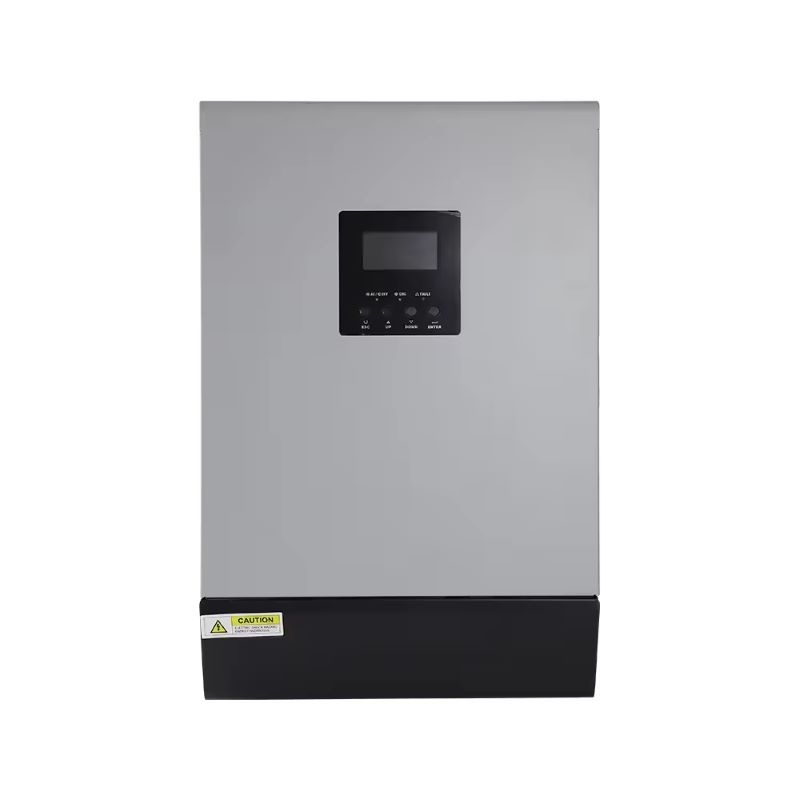
The ZLPOWER PSK 2–5 kVA pure sine wave inverter includes a built-in MPPT solar charge controller, selectable charging current, and configurable AC/solar input priority. Its product page explicitly states compatibility with mains voltage or generator power.
The PSC Plus 3–5 kVA off-grid solar inverter also combines AC and solar charging with built-in MPPT control and configurable AC/solar input priority. ZLPOWER likewise states that this series is compatible with mains voltage or generator power.
These models may suit smaller commercial facilities, retail backup systems, remote offices, service sites, and light off-grid loads. Final selection still depends on the approved AC-input range, battery configuration, and load behavior.
The ZLPOWER GS 8 kW, 10 kW, and 12 kW off-grid hybrid inverter provides AC and solar charging, optional 60 A or 120 A MPPT charging, five-stage adjustable AC charging current, AC/DC priority settings, a generator restart dry contact, and three-times peak power. These functions are relevant to pumps, compressors, refrigeration, and other loads with demanding startup behavior.
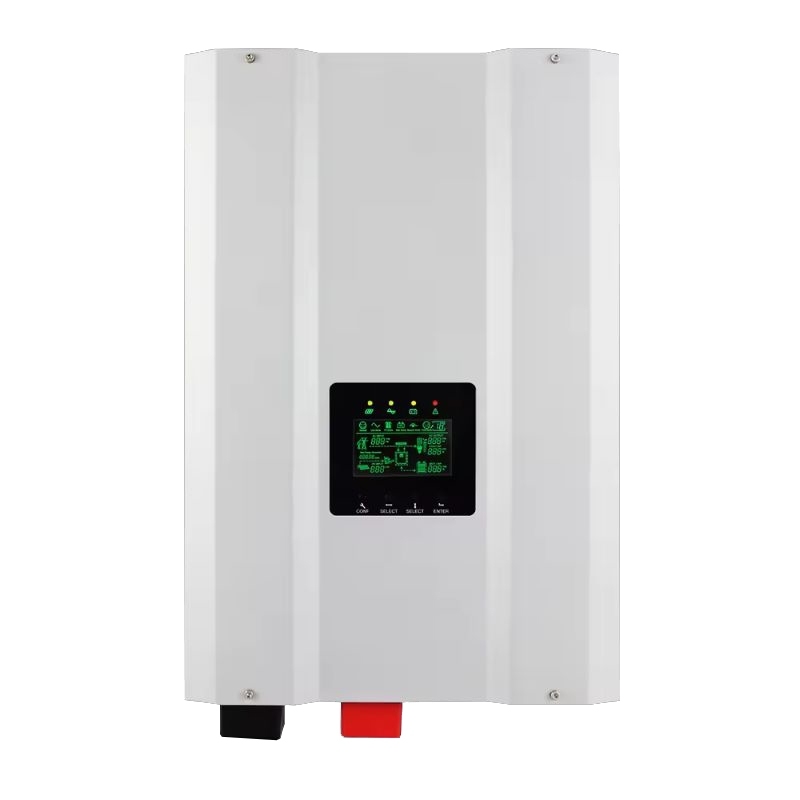
The GSII 8 kW, 10 kW, and 12 kW split-phase hybrid solar inverter lists optional MPPT charging, adjustable AC charging current, a generator restart dry contact, and three-times peak power. It is designed for split-phase applications where the project requires that output architecture.
The public GS and GSII pages do not provide a complete generator AC-input tolerance table. Compatibility with a specific genset should therefore receive a model-specific engineering review covering voltage, frequency, phase, transient behavior, charging demand, and the required control sequence.
A generator restart dry contact alone is not proof of generator-power compatibility.
A qualified solar inverter manufacturer should review project data before recommending a model. Sending complete information also reduces repeated emails and shortens the technical review.
Include:
· Continuous and peak loads
· Motor-starting data
· Generator model and datasheet
· Required AC voltage and phase
· Battery chemistry, voltage, and capacity
· PV array and MPPT requirements
· Backup-time target
· Site temperature and altitude
Distributors and private-label buyers should also provide:
· Order quantity
· Delivery schedule
· Branding and packaging requirements
· Display language
· Communication requirements
· Spare-parts expectations
· Local after-sales arrangement
Request the applicable datasheet, installation manual, AC-input specifications, overload data, warranty terms, and commissioning guidance before confirming the order.
Selecting a solar inverter with generator input requires more than matching nominal voltage and power ratings. Commercial buyers must account for running loads, motor starts, battery-charging demand, generator derating, AC-input tolerance, phase configuration, and the full start-stop sequence.
ZLPOWER can review these project details and recommend a suitable hybrid solar inverter or off-grid inverter configuration. Contact ZLPOWER for a preliminary model recommendation, generator compatibility review, and commercial quotation by sending your load schedule, generator datasheet, battery and PV specifications, required output, installation conditions, target quantity, and OEM requirements.
A: No. The generator must remain within the inverter’s approved voltage, frequency, phase, and power-quality limits during normal operation and sudden load changes.
A: It must cover simultaneous loads and battery charging, with additional capacity for motor-starting demand, losses, power factor, and site-specific derating.
A: It sends a low-power start or stop signal to a compatible controller or external relay. It does not carry the generator’s main AC supply.
A: Yes, when the inverter supports that operating mode and the generator has sufficient capacity. Adjustable AC charging current can help control the combined demand.
A: Compare the generator datasheet with the inverter’s approved AC-input range, phase requirements, charging demand, and transient performance. Model-specific confirmation from the inverter supplier is recommended before ordering.
 ChatNow
 Vania
Vania