
A failed inverter does not always need immediate replacement. A cooling fan, relay, sensor, or communication component may be repairable. The decision changes when the same unit keeps tripping, runs hot under normal load, or no longer works with the site’s batteries and operating requirements.
For 2026 procurement planning, inverter failures may also be reviewed alongside battery retrofits, load changes, monitoring upgrades, and future expansion. What looks like a repair job may be part of a wider solar repowering decision.
For EPC contractors, distributors, O&M teams, and project buyers, the key question is not simply whether the inverter can be repaired. It is whether the chosen option will restore dependable operation without creating another technical or commercial problem.
Repair remains a practical option when the fault is limited, compatible parts are available, and the original system still suits the application. Before approving any work, the project team needs to separate a serviceable component failure from wider equipment aging. That distinction affects downtime, labor cost, and the chance of another callout a few weeks later.
One cooling-fan fault is different from repeated overheating, damaged terminals, unstable charging, or several board failures. The latest alarm may show where the inverter stopped, but it may not explain why the problem developed.
Review the alarm log, operating temperature, load changes, battery condition, and previous service records. After repair, test the inverter with the actual load, charging source, battery, and transfer sequence. A unit that starts normally but trips when a pump or compressor comes online has not solved the customer’s problem.
|
Repair may be reasonable when |
Replacement may be safer when |
|
The fault is isolated |
Failures keep returning |
|
Parts and technical support remain available |
Parts or firmware are unavailable |
|
The original system still meets site demand |
Loads, batteries, or operating needs have changed |
|
Downtime is short and predictable |
Service delays are disrupting operations |
|
The repair can be tested under real load |
The unit cannot complete a stable load test |
Solar inverter repair costs more than the workshop invoice. Freight, technician travel, fault diagnosis, recommissioning, and lost operating time can change the commercial result.
A pump outage may interrupt irrigation. A refrigeration site may lose temperature control. A remote installation may depend on longer generator operation while the inverter is away for service. None of these costs appear in the component price.
Compare the repair estimate with the project’s wider operating cost. ZLPOWER’s solar inverter TCO analysis for 2026 procurement covers installation, battery matching, maintenance, downtime, spare parts, warranty pressure, and future expansion. That broader view helps buyers avoid selecting the lowest immediate price and paying more through repeated service work.
Replacement becomes more practical when repair no longer restores confidence in the system or when the existing inverter cannot support current project needs. The aim is not simply to install a newer box. A good replacement removes the reliability issue or design limit that caused repeated downtime in the first place.
Recurring overtemperature alarms, burned terminals, corrosion, unstable charging, and unexplained shutdowns deserve a wider technical review. Ended warranty coverage, discontinued control boards, or unavailable firmware can also make future repairs slow and difficult to plan.
For an EPC or distributor managing several installations, repeated emergency visits create another problem: service teams spend more time supporting old equipment and less time commissioning new projects. A suitable replacement can reduce that pressure and make spare-parts planning more predictable.
Replacement does not need to wait for a total failure. It may be commercially sensible when the next outage would interrupt an important process or create a long lead time for parts.
The original inverter may have been selected for a smaller load, a lead-acid battery bank, or a simple daytime PV system. The site may now include motors, refrigeration, lithium storage, communications equipment, or critical circuits that were not part of the first design.
A hybrid solar inverter can make sense when the project needs battery charging, backup power, or source-priority settings. Dual outputs may help separate important and non-priority loads. Parallel operation may support phased capacity growth.
Those functions are valuable only when they answer a real site requirement. A fixed battery-free project may not need advanced storage controls. A site with no expansion plan may gain little from parallel capability. Buying unused functions adds cost, configuration work, and more items for local technicians to learn.
Matching the old inverter’s power rating is not enough. The replacement must fit the existing PV array, battery, AC system, load behavior, wiring, protection equipment, and installation environment. Complete project data also gives the solar inverter supplier a fair chance to reject an unsuitable match before the equipment ships.
Put the following information in the RFQ:
· PV module model, string count, Voc, Vmp, and total array power
· Battery chemistry, nominal voltage, current limits, and BMS protocol
· AC voltage, frequency, phase, and generator requirements
· Continuous load, starting surge, and critical-load demand
· Cable sizes, breakers, isolators, grounding, and mounting space
· Ambient temperature, dust, humidity, fault records, photos, and quantity
PV open-circuit voltage must remain below the new inverter’s maximum limit, including the effect of low temperatures. The string operating voltage also needs to stay within the MPPT range.
Motor loads need separate attention. Pumps, compressors, and refrigeration equipment can draw far more power during startup than during normal operation. Selecting only from the running-load figure may lead to nuisance trips after commissioning.
Battery voltage by itself does not confirm compatibility. Check the charge and discharge current limits, BMS protocol, and system response if communication is lost. A CAN or RS485 port is only a physical interface. It does not confirm support for every battery, meter, or monitoring protocol.
A complete solar inverter replacement budget may include equipment, freight, customs clearance, installation, cable changes, protection devices, battery integration, parameter setup, training, spare parts, and downtime.
Agree in advance who will set the initial parameters and handle commissioning questions. Local training should cover safe startup and shutdown, alarm interpretation, battery communication faults, and the information technicians need to collect before requesting support.
The project schedule changes with product availability, the quality of the site data, wiring modifications, sample testing, OEM requirements, documentation, and commissioning. Complete RFQ data helps avoid delays caused by repeated technical questions.
Before placing a bulk order, ask the solar inverter supplier to confirm the selected model, firmware, battery protocol, communication requirements, and destination-market documents in writing.
Once the existing system has been checked, product selection becomes more focused. The replacement should solve the site’s specific limitation, whether that means restoring a compact off-grid system, separating priority loads, or leaving room for later expansion.
Founded in 2007 and based in Shenzhen, ZLPOWER develops and manufactures low- and high-frequency power inverters, hybrid solar inverters, and on-grid and off-grid solar charger inverters for overseas customers. Model suitability, communication options, and destination-market documents still require project-specific confirmation.
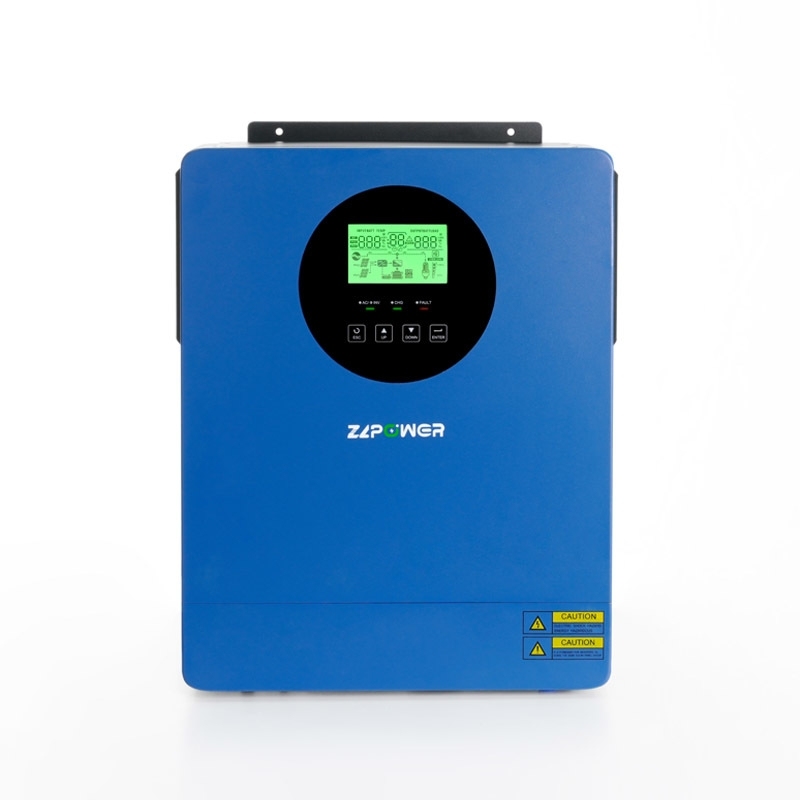
When a project needs a compact replacement and may add storage in stages, the ZLPOWER PVG 3.5 kW, 5.2 kW, and 5.5 kW series provides a practical starting point.
The series has a 120 to 450 VDC MPPT operating range, a maximum PV array open-circuit voltage of 500 VDC, and a maximum solar charging current of 100A. It can operate without a connected battery and includes an anti-dust kit.
Battery-independent operation can support a phased storage plan, subject to the available PV input, AC conditions, load, and inverter settings. It does not provide outage backup without a battery. The 100A figure refers to maximum solar charging current, not the PV string input-current limit.
For farms, workshops, and dusty remote sites, the anti-dust kit may help reduce internal dust exposure. Airflow paths and cooling components still need regular inspection.
In older backup systems, critical and non-critical equipment may share one output circuit. During an outage, general sockets or less important loads can consume the battery capacity needed for controls, communications, refrigeration, or computers.
The ZLPOWER PVX dual-output inverter series separates important and non-priority loads. It also provides pure sine wave output, battery-independent operation, and built-in MPPT solar charging.
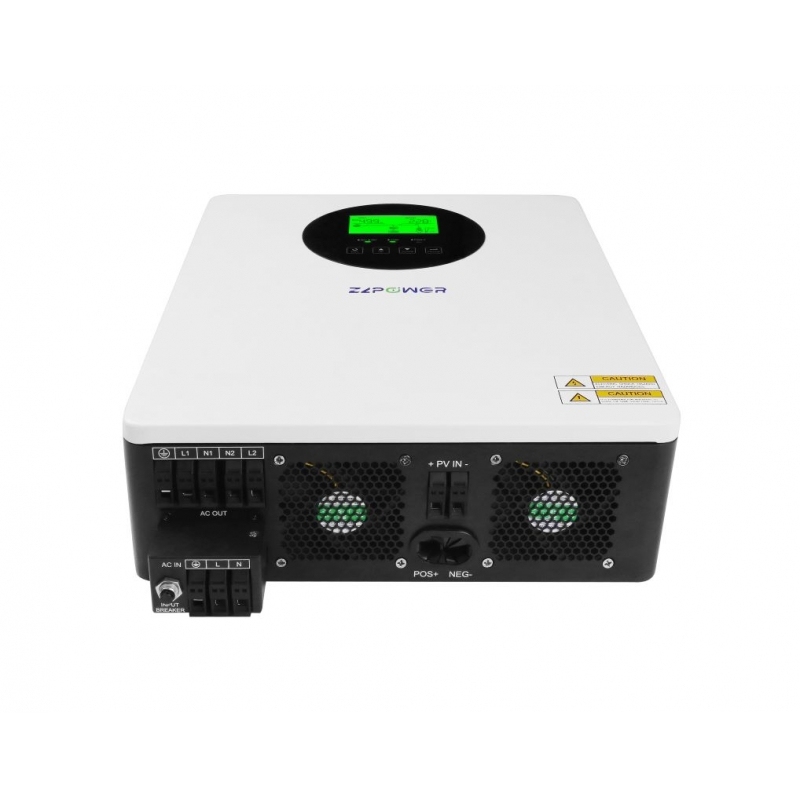
For the customer, the main benefit is better use of limited backup energy. The EPC still needs to divide the circuits correctly. Dual output cannot protect priority equipment when critical and non-critical loads remain mixed on the same branch.
Some replacement projects need more capacity later, but buying the final system size in the first order may place unnecessary pressure on the initial budget.
The ZLPOWER PVM Plus 3.5KVA and 5.5KVA series supports parallel operation for up to nine units and can form three-phase output with multiple units. It also includes a built-in 80A MPPT solar charger, battery-independent operation, and reserved RS485, CAN, USB, or RS232 communication ports.
A buyer can restore the required capacity first and add units later. Before relying on that expansion path, record the required hardware revision, firmware policy, battery-bus design, and parallel communication arrangement in the purchase agreement. The available ports do not automatically confirm compatibility with every external device or protocol.
Repair remains practical when the fault is isolated, parts are available, and the original inverter still fits the application. Replacement becomes the lower-risk choice when failures return, service support ends, downtime grows, or the project needs different batteries, priority-load control, monitoring, or additional capacity.
A reliable decision starts with complete site data rather than an old model number and a target price. Send ZLPOWER the existing inverter model, alarm history, PV string details, battery specifications, load profile, installation photos, destination market, and order quantity to request a replacement compatibility review and project-based quotation.
A: Repair may suit an isolated fault when parts and technical support remain available. Replacement is usually more practical when failures repeat, downtime increases, or the original design no longer meets the site’s needs.
A: It may, but the array Voc, Vmp, total power, string layout, cables, and protection equipment must match the new inverter’s operating limits.
A: Possibly. Check the battery voltage, charge and discharge limits, BMS protocol, communication-loss behavior, and the settings supported by the replacement inverter.
A: Include equipment, freight, customs clearance, installation, wiring changes, protection devices, commissioning, integration, training, spare parts, and downtime.
A: The schedule changes with product availability, site-data quality, wiring changes, sample approval, battery or meter integration, OEM work, documentation, and commissioning. Complete RFQ information can reduce avoidable delays.
 ChatNow
 Vania
Vania