
A time-of-use project looks simple on paper: charge the battery when electricity is cheaper, use stored energy during expensive hours, and keep enough reserve for an outage. On site, those goals often compete.
A factory may need extra power when several motors start. A telecom or security site may need a fixed battery reserve at all times. A commercial building may have low daytime demand but a sharp evening peak. In each case, the solar inverter has to work with the battery, meter, grid, and load plan—not just meet a headline power rating.
That changes the way EPC contractors, distributors, and project buyers should prepare a solar inverter quotation. The first question is not “Which model is cheapest?” It is “Can this system follow the required operating sequence without creating new cost or service problems?”
A conventional PV project may be judged mainly by output power, MPPT range, efficiency, and installation conditions. Time-of-use control adds timing. The system must decide when to charge, when to discharge, how much battery capacity to hold back, and what happens if the grid or communication link fails.
Suppose a small factory normally draws 18 kW but briefly reaches 30 kW when motors start. Sizing only from the average load may cause overload trips. Designing everything around the highest short peak may push the project cost higher than necessary.
The EPC needs to separate continuous load, short surge load, and critical load. Hourly consumption also matters. If the expensive tariff period starts after sunset, the battery may need to cover both scheduled discharge and emergency backup.
A TOU system may need a smart meter, CTs, an external EMS, a communication gateway, or additional commissioning work. Battery protocol testing can also take time when the inverter and battery come from different suppliers.
The cheapest hybrid solar inverter can become more expensive when technicians spend days tracing BMS alarms or meter direction errors.
For a wider cost review, ZLPOWER’s solar inverter TCO guide for 2026 procurement can support the shortlist after the technical requirements are clear.
Terms such as “smart mode,” “energy management,” and “multiple operating modes” do not show how an inverter will behave when the tariff changes, the battery reaches its reserve limit, or the internet connection drops.
The operating sequence should be written in plain language before a supplier confirms compatibility.
Solar First, Utility First, and battery-priority settings decide which source the inverter prefers. They do not automatically provide scheduled charging and discharging across peak and off-peak periods.
|
Function |
Main Job |
Commercial Impact |
|
Source priority |
Chooses PV, battery, or grid preference |
Useful for basic energy routing |
|
Scheduled TOU control |
Runs by time period and battery SOC |
Supports planned charge and discharge windows |
|
External EMS control |
Coordinates inverters, meters, batteries, and loads |
Adds wider control and more integration work |
A true TOU requirement may include several daily periods, weekday and weekend schedules, a minimum state of charge, grid-charging permission, and a grid-import limit. Some projects can handle this inside the inverter; others need a smart meter or external EMS.
Native TOU scheduling must be confirmed for the exact model, firmware version, meter arrangement, and control sequence. A settings screenshot or manual page is more useful than a general “smart inverter” claim.
Battery voltage alone does not confirm compatibility. Charge current, discharge current, usable capacity, BMS protocol, low-SOC behavior, and communication-loss response all affect site performance.
A 5 kW inverter cannot continuously deliver 5 kW from a battery whose BMS allows a lower discharge current. The inverter may be correctly sized while the battery side still limits output.
The ZLPOWER PVX dual-output inverter series separates priority and non-priority circuits and includes battery-independent operation and MPPT solar charging. In practice, this can reserve battery energy for controls, communications, refrigeration, computers, or other loads where downtime has a real business cost.
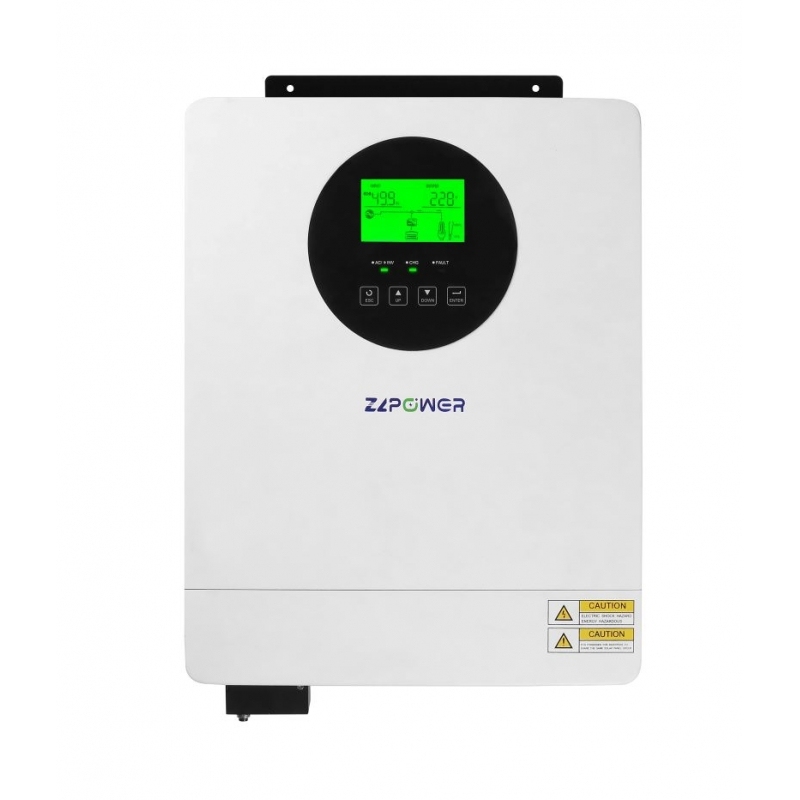
A CAN, RS232, or RS485 port is only the physical connection. The buyer still needs the supported protocol, register information, access permissions, and confirmation that the selected battery, meter, or EMS can exchange the required data.
During sample approval, test more than normal charging. Disconnect the BMS communication and check how the system reacts. Does it stop safely, switch to another control method, or raise an alarm that needs manual action? The answer affects site safety and local training needs.
Once the operating sequence is clear, the RFQ should turn it into measurable requirements. Asking for “a 5.5 kW smart solar inverter” leaves too much room for assumptions. A good solar inverter supplier needs enough project data to check the PV side, battery side, AC side, and control method as one system.
A practical RFQ should include:
· AC voltage, frequency, and phase
· PV module Voc, Vmp, array power, and string layout
· Continuous load, surge load, and critical-load demand
· Battery chemistry, voltage, current limits, and BMS protocol
· TOU periods, reserve SOC, and grid-charging rules
· Meter, EMS, generator, and monitoring requirements
· Quantity, destination market, delivery target, and OEM needs
The ZLPOWER PVG 3.5 kW, 5.2 kW, and 5.5 kW series uses a 120–450 VDC MPPT operating range, a 500 VDC maximum PV open-circuit voltage, and a built-in 100A MPPT solar charger. It can also operate without a battery connected.
For a phased project, battery-independent operation gives the buyer room to install storage later. It does not provide backup power without a battery. The 100A figure is also a maximum; actual charging current depends on the PV array, battery voltage, BMS limit, temperature, and settings.
Some projects start with one or two units and expand after the customer adds equipment. In that case, parallel operation and firmware compatibility need to be agreed before the first shipment.
The ZLPOWER PVM Plus 3.5KVA and 5.5KVA off-grid inverter series supports parallel operation for up to nine units. The published configuration also allows three-phase output using multiple units and lists an 80A MPPT charger, battery-independent operation, configurable battery charging current and AC/solar charger priority, and reserved RS485, CAN, USB, or RS232 ports.
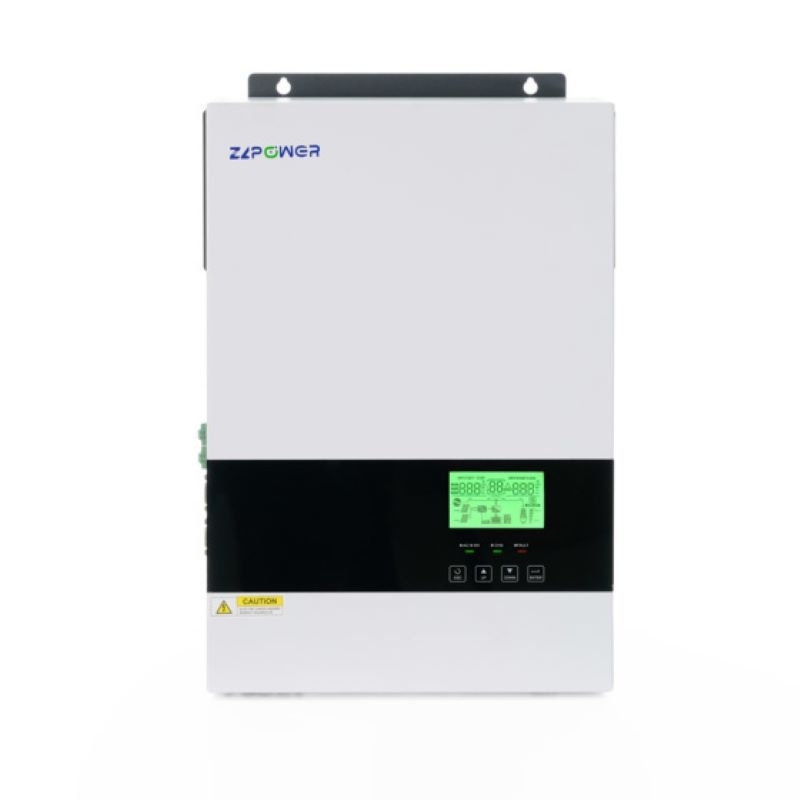
This can reduce first-stage investment and leave room for growth. Hardware revisions, firmware policy, battery-bus design, and parallel communication requirements should still be agreed in writing.
A sample test should reproduce the project’s battery, meter, control schedule, and critical-load behavior as closely as practical. Check scheduled charge and discharge, SOC reporting, meter direction, transfer to backup, alarm history, communication loss, and restart after a full shutdown. Where motors or compressors are involved, test the real starting condition rather than only a resistive load.
The same review should cover service. Confirm who sets the initial parameters, what remote support is available, whether local technicians need training, and which spare parts are recommended for the first batch. For OEM orders, agree on labels, packaging, manuals, firmware, certificates, and sample approval before mass production.
Certificates need model-level review. A company certificate or a certificate for another series should not be treated as approval for the product being ordered or for every destination market.
A successful TOU project begins with a clear operating plan. The EPC must know the load profile, tariff periods, battery reserve, critical circuits, and communication requirements before comparing inverter prices.
From there, model selection becomes more practical. Dual output can protect priority loads. Battery-independent operation can support phased storage plans. Parallel capability can leave room for expansion. Communication ports can support integration, but only when the required protocol is available.
ZLPOWER offers solar inverter platforms for different commercial and off-grid project layouts. Send the technical team your PV string data, load profile, battery limits, control schedule, destination market, order quantity, and delivery target. ZLPOWER can then review the configuration and prepare a project-based solar inverter quotation.
A: No. Charging priority selects the preferred energy source. TOU scheduling normally requires programmed time windows, battery SOC limits, and defined charging or discharging commands.
A: Some inverter platforms on the market can handle basic schedules internally. Whether a specific ZLPOWER model supports the required schedule must be confirmed by model, firmware, meter setup, and control sequence.
A: The supplier needs grid data, PV string details, load and surge figures, battery specifications, critical-load requirements, TOU periods, site conditions, destination market, quantity, and OEM requirements.
A: Common additions include meters, CTs, communication gateways, EMS integration, battery testing, commissioning, training, spare parts, certification work, and future expansion.
A: Yes, especially when the project uses lithium batteries, external meters, scheduled battery dispatch, or a third-party EMS. The sample should be tested with the intended battery protocol and operating sequence before mass production is approved.
 ChatNow
 Vania
Vania