
A short power cut may look small on a maintenance report. On a factory floor or at a telecom site, it can create a much bigger problem. A packaging line stops in the middle of a batch. A CNC machine loses position. A remote base station drops service, and the nearest technician may be hours away.
For manufacturing and telecom operations, downtime is not only an operations issue anymore. It is also a power-system design issue. Grid supply can be unstable. Diesel generators cost money to run and service. Solar panels alone cannot support night loads. A battery bank without smart power control may also fall short.
That is why the commercial hybrid inverter has become a practical option for industrial and telecom backup projects. It connects PV input, grid power, batteries, and priority loads in one system. It cannot remove every outage risk, but it can help lower downtime exposure when the grid becomes weak, unstable, or unavailable.
Manufacturing plants and telecom stations both depend on steady power, but downtime affects them in different ways. A factory usually deals with process loss and restart time. A telecom site deals with service continuity, remote access, and backup runtime.
In manufacturing, even a short interruption can trigger a chain reaction. Motors trip. Control panels reset. Sensors lose data. Heating, cooling, pressure, or filling processes may need to restart from the beginning. If raw materials are already inside the machine, waste can follow.
The visible cost is lost production time. The less visible cost is often worse: delayed delivery, extra labor, machine inspection, spoiled materials, and customer complaints. For small and mid-sized factories, one unstable power day can disrupt an entire week’s schedule.
Telecom loads are often more predictable than factory loads, but the uptime requirement is strict. Base stations, routers, radio equipment, monitoring devices, and cooling fans need stable electricity. In rural areas, islands, industrial parks, and weak-grid markets, power quality may change by season, weather, or even time of day.
For telecom integrators, the goal is not simply to install a solar inverter. The real goal is to keep communication equipment running with a backup system that is stable, serviceable, and properly sized for the site.
A hybrid inverter manages several power sources. It converts DC power from solar panels or batteries into AC power for equipment. It can charge batteries from PV input or AC input. It can also control how grid power, PV power, and battery backup are used.
This matters because commercial loads are not equal. A PLC, server rack, telecom cabinet, security system, or production monitor may need power priority. Office lighting, comfort cooling, or auxiliary outlets may not.
The International Energy Agency has noted that distributed solar PV applications, including commercial, industrial, and off-grid projects, are a major part of global PV expansion. Solar-plus-storage systems are also growing in markets where grid supply is unreliable. That trend fits many B2B projects: lower energy exposure is useful, but backup power that works during grid trouble is often the bigger concern.
Many outages are not long blackouts. Some are short dips, flickers, or unstable recovery events. These small disturbances can still reboot electronics or stop sensitive machinery.
A hybrid inverter with battery backup can help selected loads stay powered during these interruptions. In a manufacturing site, that may support control cabinets, monitoring screens, network devices, safety lighting, or selected production-support equipment. In a telecom station, it may keep radio equipment and communication devices active while the main input changes.
Battery backup is often treated as an emergency feature, but it also helps in weak-grid conditions. When voltage quality is poor or supply is inconsistent, stored energy gives the system another source to draw from.
Battery design should match the inverter model, battery voltage, charging current, required backup time, and site temperature. This is especially important for B2B systems, where poor matching may lead to short runtime, early battery aging, or unstable operation.
PV input adds another layer of support during daytime operation. It can charge batteries, support selected loads, and reduce the need to run diesel generators for every short outage.
This also brings a practical sustainability benefit. When PV power and battery backup reduce generator runtime, sites may lower fuel deliveries, maintenance visits, and local emissions. For remote telecom stations, fewer fuel trips can also reduce service pressure and improve site management.
ZLPOWER offers hybrid and off-grid inverter options for different commercial and industrial scenarios. The right choice depends on the load profile, backup time target, output phase, PV input design, and future expansion plan.
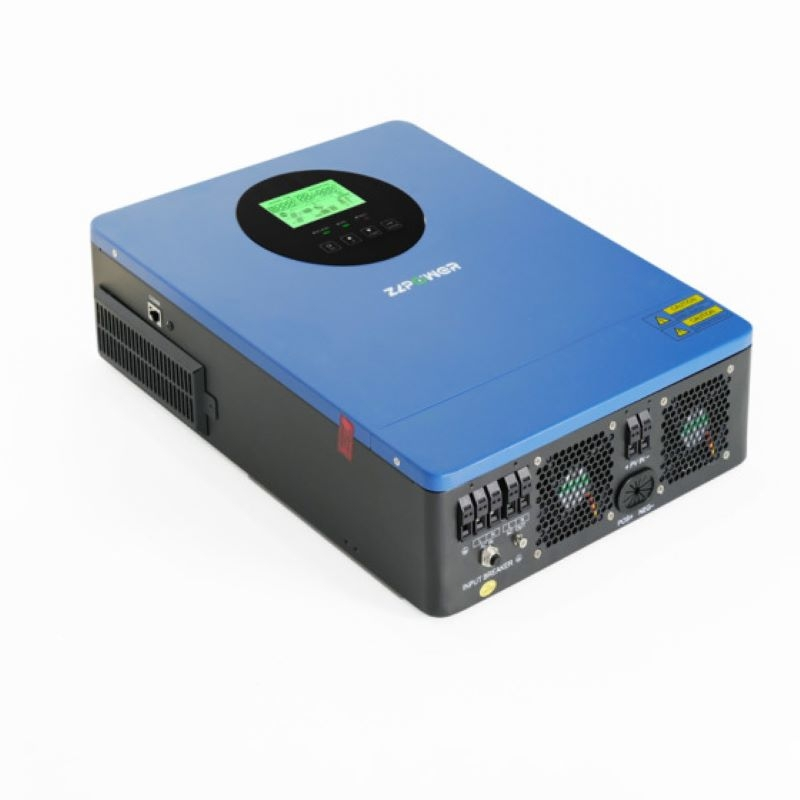
The ZLPOWER PVX4.0K-6.0K Off-Grid dual output inverter is suitable for projects where critical and non-critical loads should be separated. Its dual output design helps direct backup power to the equipment that matters most, instead of letting all loads compete for the same battery capacity.
In a factory, this can support PLCs, monitoring systems, network cabinets, security systems, and selected lighting. In a telecom site, it can help prioritize communication equipment while reducing pressure from auxiliary loads. For projects where uptime depends on load separation, PVX is a practical fit.
The ZLPOWER PVM Plus series is more suitable for projects that may grow over time. Its value is scalability: selected models support parallel operation and three-phase output, making the system easier to expand when load demand increases.
For EPC contractors and project integrators, that flexibility matters. A small commercial site may start with limited backup demand, then add more equipment, more PV capacity, or three-phase loads later. PVM Plus gives these projects a more flexible route than a fixed-size backup system.
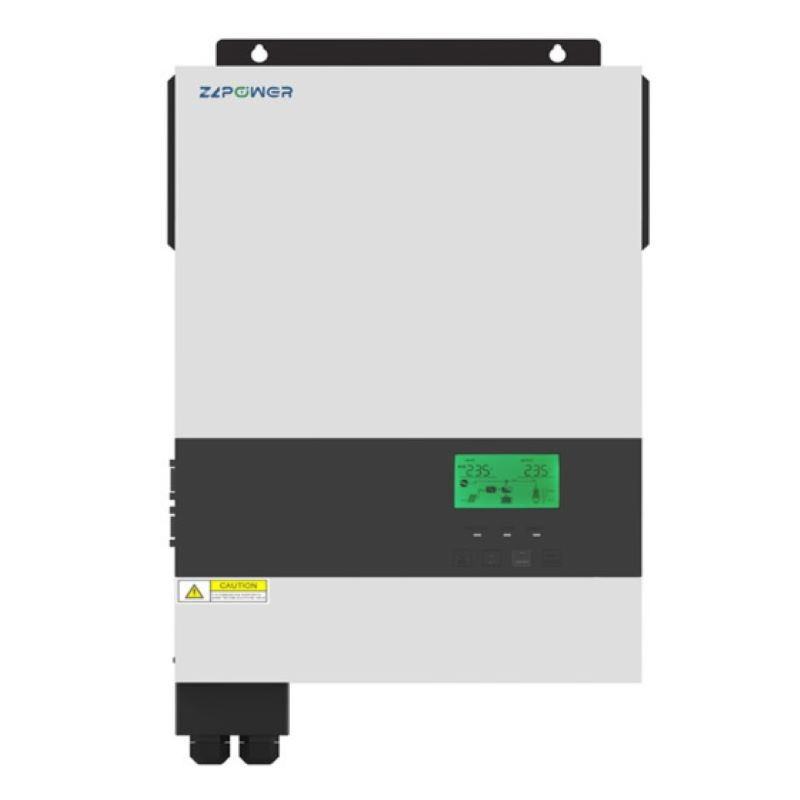
The ZLPOWER PVG high-frequency solar inverter range is designed for flexible off-grid and backup applications. It supports PV charging and battery-supported power in a compact setup, making it useful for sites where space, budget, and simple installation all matter.
For farms, workshops, distributed commercial sites, and telecom-related backup systems, this type of off-grid hybrid solar inverter offers a practical path to daytime PV use and backup support. The key is not oversizing the system. The key is matching the inverter to the load that needs protection.
|
Project Scenario |
Main Power Concern |
Suitable ZLPOWER Direction |
|
Small factory |
Control systems, restart loss, motor trips |
PVX or PVM Plus, depending on load size |
|
Telecom base station |
Backup runtime and weak-grid operation |
PVX or PVG, based on site layout |
|
Commercial facility |
Selected circuits and daily backup |
PVG or PVX |
|
Scalable C&I project |
Expansion and possible three-phase output |
PVM Plus |
A commercial hybrid inverter should not be selected by rated power alone. Manufacturing and telecom loads behave differently from home appliances, especially when motors, pumps, cooling fans, servers, and control systems are mixed together.
Before choosing a system, project teams should check:
· Continuous load and startup surge
· Single-phase or three-phase output demand
· Backup runtime target for priority loads
· PV input range and MPPT charging capacity
· Battery voltage, charging current, and site temperature
· Monitoring, communication ports, and future expansion needs
Surge demand deserves special attention. A site may look manageable during normal operation, then stress the inverter when motors, compressors, or cooling fans start at the same time. A practical backup plan usually begins with a load list, not a product catalog.
Downtime risk in manufacturing and telecom depends on more than one device. It requires proper load planning, inverter sizing, battery configuration, and installation. A hybrid inverter plays a key role because it manages how grid power, PV energy, and battery backup supply priority loads.
For factories, ZLPOWER hybrid inverter solutions can support control systems, motors, monitoring devices, and selected production loads. For telecom projects, they can help maintain backup power for base stations, remote equipment, and weak-grid sites. With pure sine wave output, MPPT solar charging, dual output load management, and scalable options on selected models, ZLPOWER helps B2B buyers build more reliable backup power systems.
For project matching, contact ZLPOWER with load details, backup time targets, and installation conditions.
Q1: How does a hybrid inverter help lower downtime risk in manufacturing?
A: It manages PV input, grid power, and battery backup to keep priority loads running during short outages or unstable grid conditions.
Q2: Can a hybrid solar inverter support telecom backup power?
A: Yes. It can support PV charging, battery backup, and AC input management for weak-grid, off-grid, or remote telecom sites.
Q3: What should be checked before choosing a solar inverter for a factory?
A: Key checks include load size, startup surge, output phase, PV input range, battery capacity, and required backup time.
Q4: Why is battery backup important if a site already has solar panels?
A: Solar panels only work when sunlight is available. Battery backup stores energy for night use, cloudy periods, and grid interruptions.
Q5: What ZLPOWER hybrid inverter features matter for critical load backup?
A: Key features include pure sine wave output, MPPT charging, PVX dual output, battery independent design, and scalable parallel options on selected models.
 ChatNow
 Vania
Vania