
The world of industrial power has shifted a lot in the last ten years. It’s no longer just about efficiency—it’s about resilience. Factories today operate around the clock. Even one moment of shutdown can cost thousands in losses. Automation and exact robotics have revealed a sneaky problem: poor quality electricity. Sudden voltage jumps, wavy distortions, and shaky frequencies damage delicate control setups and strong motors badly.
This is why Low Frequency (LF) inverters show their real value. They use big copper-core transformers. These provide the sturdy dependability that today‘s industrial motor inverters really need. High-frequency models might weigh less and cost fewer bucks, but LF types stay the top choice for tough inductive tasks like pumps, compressors, and CNC tools.
Shenzhen ZLPOWER Electronics Co., Ltd. is a national high-tech enterprise specializing in the research and development, production, and sales of UPS power supply, Power Inverter, Solar inverter, car charging pile, EPS Power supply founded in 2007. That solid background in engineering supports the creation of its ZLPOWER LW Series. This main product line is made for strong industrial toughness.
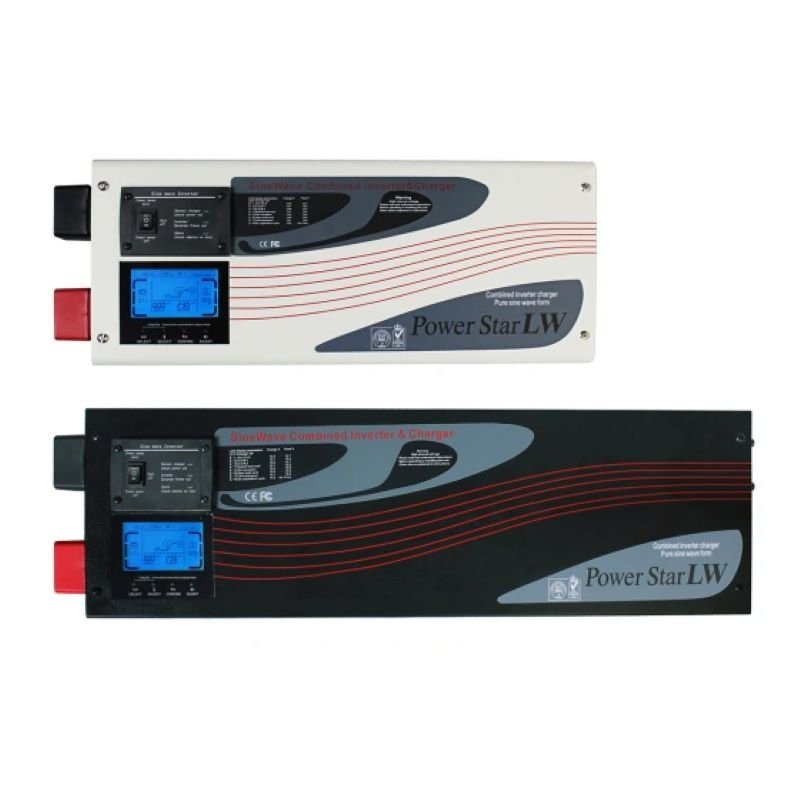
The gap between low frequency (LF) and high frequency (HF) inverter setups runs right to their hearts.
LF inverters depend on a huge copper transformer. It‘s a real force that separates and steadies output voltage. This happens even during wild changes in load. HF units use light electronic switching parts. These switch quickly, but they break easily when big surges hit.
In rough industrial spots—like dusty areas, wet conditions, or hot spots—lasting strength is a must. LF builds spread heat naturally through their solid metal parts. HF systems count a lot on fans and MOSFETs. Those wear out quicker as time goes on. For non-stop jobs in water plants or mining areas, LF setup just holds up better over the years.
For the precise automation systems of 2026, power pure sine wave inverter tech is key. Motors that get modified sine waves often shake or get too hot. This comes from wavy distortions. The ZLPOWER LW series delivers clean grid-like output that keeps bearings cool and sensors accurate—something no cheap inverter can fake.
Any engineer understands that starting current hits hard. An industrial motor begins from zero speed. It can pull three to five times its normal current for a few seconds. Experts call this inrush current. Such a rush can overload slim electronics right away.
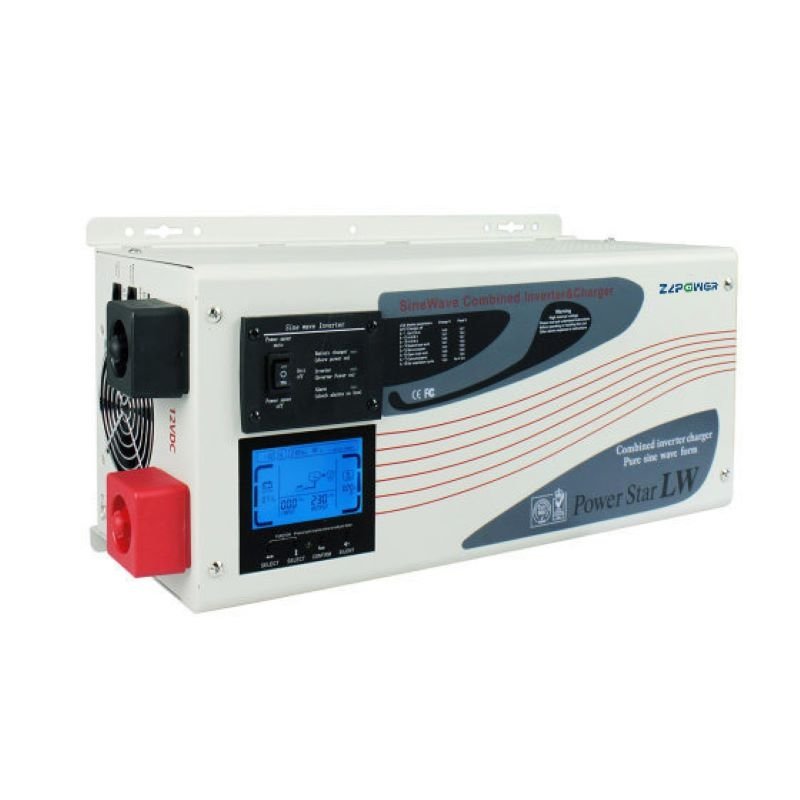
That‘s the reason ZLPOWER’s LW Series low frequency inverter shines. The LW Series Low Frequency Inverter—also known as the Power Star Pure Sine Wave Inverter Charger 1KW 2KW 3KW, LCD digital display, 3times peak power, low frequency type with transformer, UPS function. That “3× peak power” isn’t marketing fluff—it’s physics at work. The heavy transformer acts as an energy buffer during those milliseconds when inductive loads spike.
· Centrifugal Pumps: They need even torque buildup. LF design stops false shutdowns. In one factory setup, this cut downtime by 40% during peak hours.
· Compressors: They manage repeated rushes without parts getting too hot. Field tests in oil sites showed LF units running 25% longer without issues.
· CNC Machinery: It holds steady spindle speed under changing feed pressures. Workshops report smoother cuts and less tool wear with LF support.
In all these examples, the transformer-based setup soaks up short energy bursts smoothly. It doesn‘t push them to fragile electronic parts.
Picking an industrial-grade inverter isn‘t random. It‘s engineering math blended with operational foresight.
|
Factor |
Description |
Recommendation |
|
Continuous Load |
Steady-state wattage demand |
Choose inverter rated ≥1.25× continuous load |
|
Peak Load |
Startup or surge power |
Ensure ≥3× surge capacity |
|
Environment |
Heat/dust/humidity exposure |
Prefer sealed LF units with internal fans |
|
Integration Needs |
UPS/Solar/ATS compatibility |
Look for built-in transfer switch & charger |
Modern facilities should seek clever connection options too.
· LCD real-time monitoring
· 5-stage intelligent charging
· Automatic Transfer Switch (ATS)
LW Series 500W 750W 1000W MINI Solar Power Inverters widely applied in wind generator, Solar power system, house, vehicle, ship, and places where lack of city power. The same base grows to 6KW+ split-phase setups. These suit multi-motor arrangements or mixed solar systems well.
A solid LF inverter is more than just strong. It makes better sense for money over the long haul.
Printed circuit boards often burn out in high-frequency models. This happens from heat pressure on MOSFETs. Copper-transformer units from ZLPOWER fight these problems. They spread heat evenly through their main body.
HF units might require swaps every three to five years. LF systems frequently go beyond ten years with basic upkeep. This drops the overall cost of owning them. Across ten years and several sites, those savings build up a lot. Industry reports from Asian factories show LF models cutting repair bills by up to 30%.
Factories seldom work in ideal clean rooms. Dusty shops or damp pump areas call for tight seals and heat resistance. These are the strong points of LF designs. ZLPOWER engineers have tested gear in various Asia-Pacific weather for years.
As automation gets trickier toward 2026, steady energy changing turns into vital setup. It‘s not just extra gear anymore. A low frequency inverter does over DC-to-AC switching. It guards mechanical parts from electrical mess.
ZLPOWER keeps linking old-school copper-core strength with modern smart features. It mixes transformer power with easy monitoring screens. Whether powering remote pumping stations or factory lines full of servo motors, the LW Series ensures consistent startup performance without compromise.
Working with ZLPOWER equals investing in uptime itself. Resilience isn‘t an option now. It‘s the base for every competitive industrial site around the globe.
Q1: Why is a low frequency inverter preferred over high frequency for industrial water pumps?
A: Industrial pumps act as inductive loads. They create huge startup rushes—often three times the normal current. A low frequency inverter like ZLPOWER’s LW series uses a large iron transformer. This can handle those rushes without shutting off or harming inside parts.
Q2: How does pure sine wave output improve motor performance?
A: A power pure sine wave inverter copies top-quality grid power. Motors on this type of wave face less shaking and heat buildup. That‘s unlike modified sine outputs. It stretches bearing life and cuts upkeep expenses directly.
Q3: Can the LW series integrate into existing UPS or solar backup frameworks?
A: Yes. Each unit has a built-in charger and ATS function. This lets it switch smoothly between grid and battery power. It‘s perfect for mixed solar-industrial systems in out-of-the-way spots.
Q4: What makes split-phase capability important for factories?
A: Split-phase output supports both simple single-phase gear (120V) and big machines (240V) at once. This eases wiring plans in varied production areas.
Q5: Does weight matter when evaluating low frequency inverters?
A: Absolutely. The extra weight comes from the inner copper transformer bulk. It‘s a mark of lasting strength, not waste. It also offers natural shielding from magnetic fields. That‘s vital for ongoing industrial tasks where slimmer HF types might quit too soon.
 ChatNow
 Vania
Vania