
For businesses that sit far from the city grid—or simply live with random power cuts—keeping electricity stable is no longer just “nice to have.” Farms lose cooling for livestock, construction offices can’t run tools, and retail stores can’t even open a POS terminal without power. One blackout at the wrong moment can ruin a whole day’s work. So more commercial users are quietly shifting to inverter-based solar power systems. They‘re not doing it because it’s trendy, but because it solves problems they deal with every week.
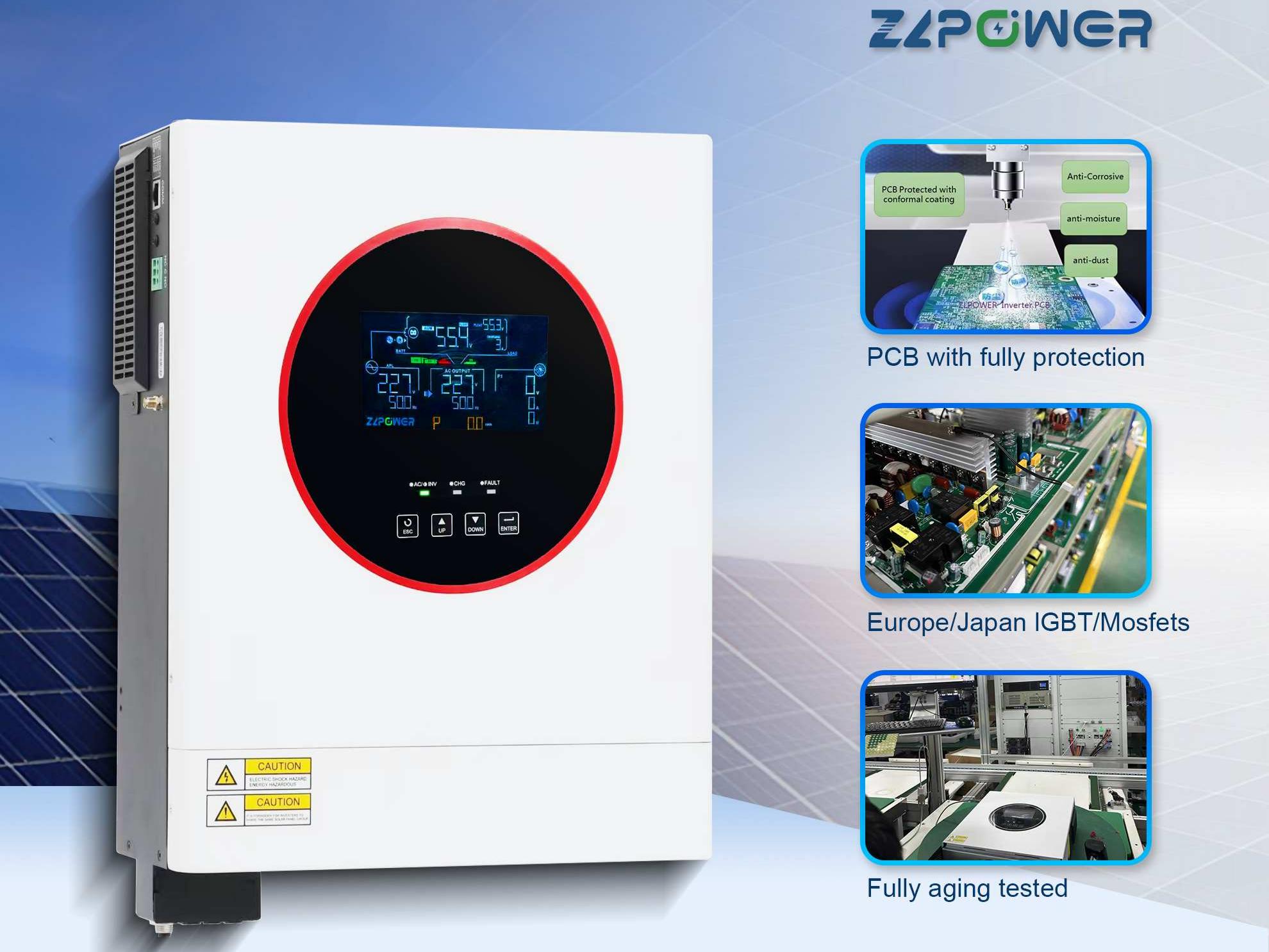
Solar panels give you DC electricity. Most commercial equipment doesn’t want DC—they’re built for clean AC. That’s where the inverter steps in. A good inverter takes that raw solar power and turns it into smooth AC that machines and computers actually accept. The key word is smooth. A pure sine wave inverter outputs electricity that behaves almost exactly like what comes from the utility grid.
Anything sensitive—servers, POS systems, medical instruments, motors—basically expects this kind of smooth wave. If the power is choppy or distorted, weird things happen: buzzing noises, overheating, sudden shutdowns. Sometimes even warranty disputes. So yes, pure sine wave matters, especially for businesses running daily operations.
Choosing between a pure off-grid inverter and a hybrid inverter is like choosing between “no grid at all” and “grid when needed.” The logic is simple:
These are for sites where the grid might as well not exist. Think of an isolated farm shed or a workshop halfway up a mountain road. The inverter converts solar DC to AC, manages batteries, and that’s about it. Many models bundle an MPPT controller inside for convenience. They’re straightforward and rugged.
Hybrids, meanwhile, behave more like a traffic cop. Solar is the main driver, but they can also pull power from a generator or the utility grid when solar dips. And when the grid goes out, they switch over almost instantly. A good example is the PVG 3.5KW / 5.2KW / 5.5KW Off-Grid Hybrid Solar Inverter. It carries a 100A MPPT controller and even runs without a battery if needed. In real commercial settings—stores, offices, logistics warehouses—this flexibility matters more than people realize.
Many businesses end up preferring hybrids because they offer the best of both worlds: solar for long-term savings, backup for peace of mind. Nobody wants a system that works great only on sunny days.
Energy needs vary a lot. A small retail kiosk running two POS terminals and a freezer doesn’t consume the same energy as a grain-drying workshop. So start by looking at your daily kWh usage and the biggest machine that needs starting power.
Remote offices, mobile clinics, little shops. Something like the PVM Plus 3.5KVA / 5.5KVA Off-Grid Inverter works well here. It has a simple LCD and doesn’t force you to use a battery.
These are farms, workshops, mid-size businesses. Often they have motors that start multiple times a day.
Warehouses, industrial processing plants. Running HVAC, compressors, and sometimes three-phase equipment.
Solar systems have a funny habit: users always say “this is enough,” but six months later they add another machine or install cold storage. Choosing an expandable inverter (parallel or modular) saves a lot of headache in the future.
Every business has at least one troublemaker: a refrigerator, a pump, an AC compressor—something that pulls two to three times its rated power on startup. If your peak load is 10kW, picking a 10kW inverter is asking for daily shutdowns. A common rule on real projects: give yourself 20–30% breathing room.
Most newer commercial systems run at 48V because it’s more efficient. But battery chemistry matters too. A lithium pack like the EL Series 48V 50–100Ah LiFePO4 can cycle about 3,500 times—roughly 10 years for normal business usage. Lead-acid won’t get anywhere close.
Modified sine wave still exists mainly because it’s cheap. But for businesses? Better skip it. The GW Series Pure Sine Wave Inverter Charger 1KW–6KW produces a stable wave and even has AVR to keep voltage from wobbling when machines kick in.
If your site uses grid + generator + solar, choose a model with fast AC charging and <10ms transfer time. That speed is important. A POS terminal can reboot even with a 20ms delay.
Many businesses only realize they need three-phase power after buying new equipment. Parallel-ready systems reduce future installation cost. For very large commercial users, modular UPS systems like ZLPOWER 93M Series (25–600kVA) are commonly used in data rooms and manufacturing blocks.
When something goes wrong, the site manager isn’t always on-site. Remote monitoring saves a lot of unnecessary drive time. The GSII 8KW / 10KW / 12KW Split Phase Hybrid Inverter includes Wi-Fi, letting technicians check logs or faults straight from a phone.
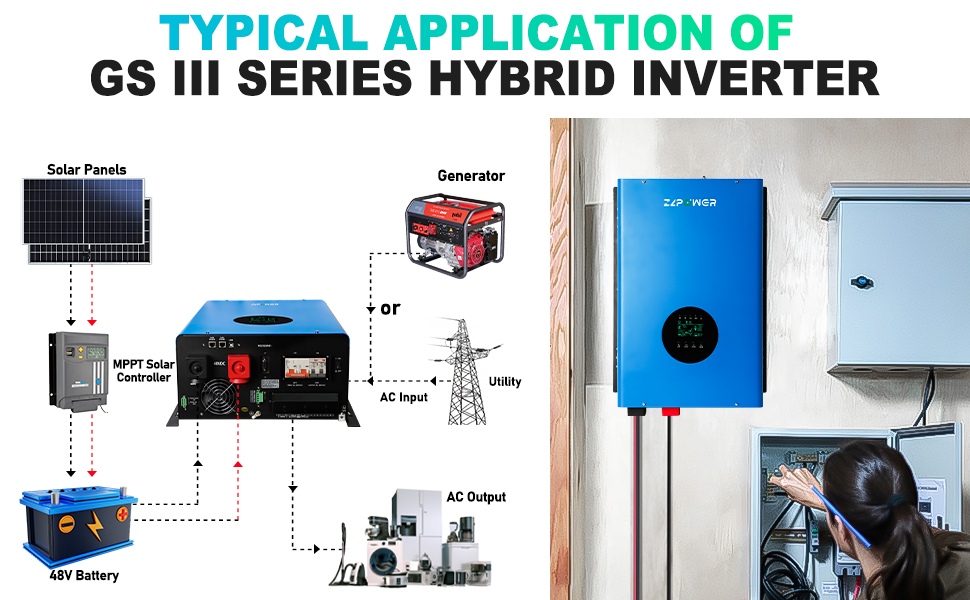
A well-chosen inverter system does more than keep the lights on—it protects your equipment, cuts fuel use, and gives your business room to grow. Some sites thrive with a compact 3kW unit; others need a full hybrid system with battery-independent mode and parallel expansion. ZLPOWER’s portfolio covers both small projects and multi-module commercial plants, so matching a system to your facility is more about planning and load analysis than guesswork.
A: Pure off-grid inverters only use solar and batteries. Hybrids can charge from solar, the grid, or a generator, and switch between them automatically.
A: Yes—if the solar array and battery bank are sized correctly. Some farms already run 24/7 with no grid at all.
A: No. Some cheaper models don’t. For commercial equipment, pure sine wave is the safe choice.
 ChatNow
 Vania
Vania