
This question shows up in almost every solar project discussion.
Hybrid inverter or inverter charger. Same job? Not really.
Specs can look similar. Real use tells a different story.
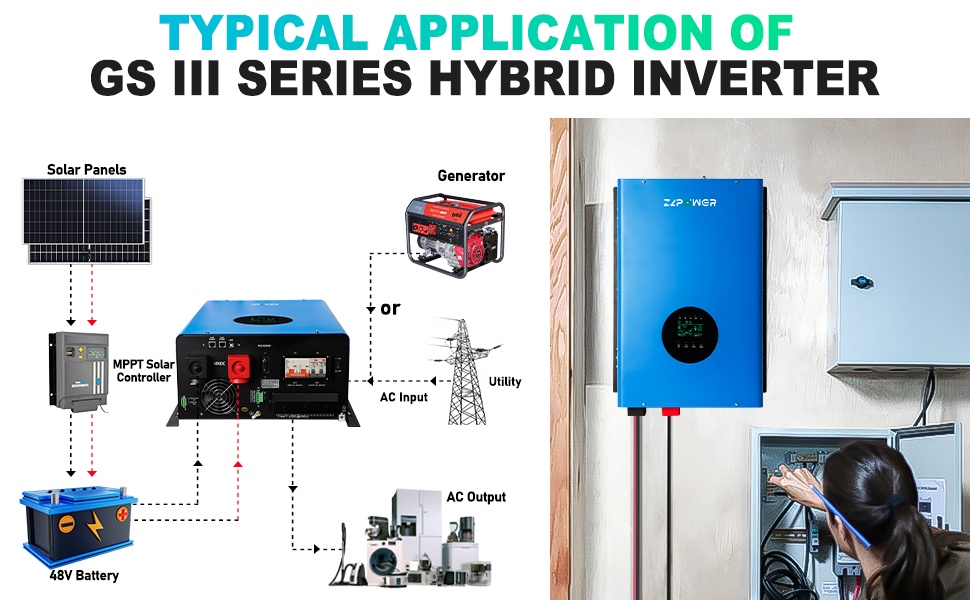
A hybrid inverter is not just an inverter with a fancy name.
In practice, it replaces several boxes at once:
l solar inverter
l battery charger
l grid changeover unit
Everything is inside one machine. Fewer cables. Fewer mistakes during installation.
Most hybrid inverters from ZLPOWER come with a built-in MPPT solar charge controller. This is important. Without MPPT, solar output drops fast when temperature, shading, or panel voltage changes. With MPPT, the inverter keeps chasing usable power all day, even when conditions aren’t perfect.
One detail often missed during sales talks: battery-independent mode.
Many hybrid inverters can run loads directly from PV or grid without a battery connected. This is useful when batteries arrive late, budgets are tight, or storage is planned for later phases.
l Backup without thinking about it
When the grid goes down, the switch is automatic. No buttons. No delay long enough to notice.
l Using solar first
Solar power goes to loads before the grid. Extra energy goes to batteries. Grid power only comes in when needed.
l Easy checking on site
LCD screens, USB logs, WiFi apps. Installers use these more than customers do, especially during troubleshooting.
l Not locking the system size
3.5kW, 4kW, 5.5kW, 6kW systems can usually handle added loads later. Not unlimited, but flexible enough.
Hybrid inverters are commonly installed where grid power is unreliable, or where electricity prices make self-consumption worth the effort.
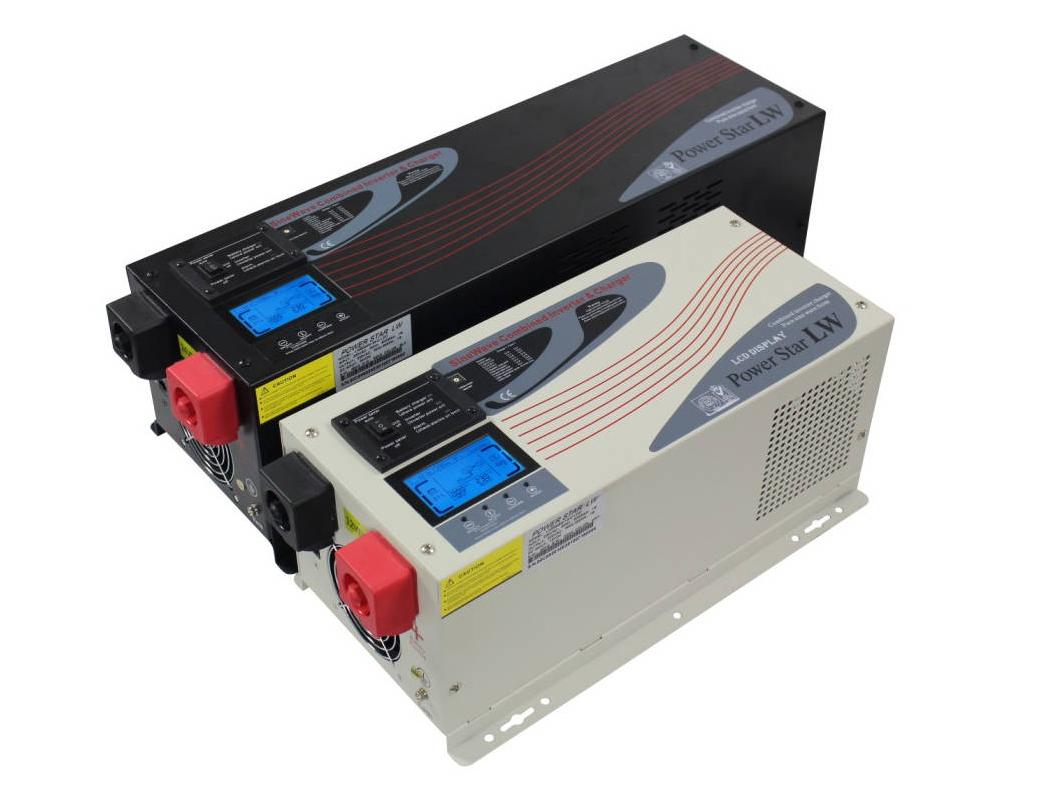
An inverter charger from ZLPOWER is simpler by design.
It converts battery DC to AC.
It charges batteries using AC from grid or generator.
That’s the core job.
Solar is not part of the basic structure. If solar is needed, an external charge controller is added. That works, but wiring and setup become more manual.
l Off-grid inverter systems
Cabins, remote houses, telecom sites. Often paired with diesel generators.
l Basic backup systems
Batteries stay idle most of the time. They only work during outages.
These systems are reliable, but not very smart.
In small systems, inverter chargers do the job.
In solar-heavy systems, limits show up fast.
l Solar usually needs extra hardware
l Power source priority must be set manually
l No dynamic control between PV, battery, and grid
It works. Just not elegant.
|
Item |
Hybrid Inverter |
Inverter Charger |
|
Solar Input |
Built-in MPPT |
External controller |
|
Battery Use |
Optional |
Required |
|
Grid Switching |
Automatic |
Often manual |
|
Energy Logic |
Smart |
Basic |
|
Monitoring |
LCD / USB / WiFi |
Simple display |
|
Initial Cost |
Higher |
Lower |
Pros
l Can operate without batteries
l Built-in MPPT (often up to 100A)
l Cleaner wiring and layout
l Suitable for off-grid and hybrid systems
Cons
l Higher upfront price
l Setup takes time
l Wrong configuration can cause confusion if loads are mixed
Pros
l Simple and familiar
l Lower cost
l Stable output for appliances
l Good choice where grid is usually available
Cons
l Weak solar integration
l No smart energy routing
l Expansion usually means more devices
Hybrid inverters fit better when:
l Power cuts are frequent
l Batteries are part of the long-term plan
l Solar production is high
l Loads may increase later
Dual-output hybrid models are especially useful. Critical loads stay powered. Non-critical loads drop off. No drama.
These setups are common in villas, farms, workshops, and small industrial sites.
There is no “better inverter” in general.
A hybrid inverter suits systems where solar and batteries matter every day.
An inverter charger suits systems where backup matters only sometimes.
The choice depends less on marketing terms and more on how power is actually used.
A: A hybrid inverter manages solar, batteries, and grid together. An inverter charger mainly handles batteries and AC input.
A: Yes. Many models support battery-independent operation.
A: Hybrid inverters, because solar power is prioritized automatically.
A: Yes. For simple off-grid systems, they remain practical and cost-effective.
 ChatNow
 Vania
Vania