
Edge computing is quickly changing how companies manage data. It moves processing power closer to where data is created. This change powers many always-on applications, from AI analytics to real-time monitoring in remote sites. These applications need steady, uninterrupted power. IDC says global spending on edge computing is rising 13.8% each year. It will hit $378 billion by 2028.

Traditional uninterruptible power supply (UPS) systems were built for big central data centers. They don’t work well in fast-changing edge locations. Edge sites often see sudden power demand shifts, have little space, and few staff members on site. That makes old-style UPS units hard to expand and inflexible. This is exactly where modular UPS systems shine.
Modular UPS units give clear advantages. They offer step-by-step scaling, strong resilience, and built-in backup features. They turn edge power from a weak point into a tough, adaptable foundation that keeps critical operations running smoothly.
Edge and distributed IT setups are growing fast. Omdia predicts 7–8% yearly growth in edge infrastructure through 2029. That’s faster than global GDP. This growth drives important use cases in many sectors:
· Manufacturing uses edge for real-time AI defect detection.
· Hospitals depend on it for imaging and patient monitoring.
· Retail runs smart inventory and checkout systems.
· Logistics needs it for connected warehouses and tracking.
· Telecom companies use edge nodes to cut latency.
In these places, even a short power loss can damage equipment, lose data, stop services, or create safety issues. Most edge sites have little or no IT staff. Fixing problems manually during an outage just isn’t possible.
Modular UPS systems solve these problems with smart, scalable protection. Take the 92M Series Modular Online UPS 20-200KVA (380V/400V/415V) as an example. It comes with:
1. Modular design – up to 20 power modules in parallel, all online hot-swappable.
2. N+X redundancy – LCD screen supporting multiple languages (Chinese/English/Russian/German/Spanish/Italian/French).
3. Independent charger – each module has its own charger and smart charging control to extend battery life.
These features give true “pay-as-you-grow” scaling. Companies start with only the capacity they need today. Later, they add modules without replacing the whole system. Thanks to hot-swappable Live Swap technology, technicians can service or upgrade the unit without ever turning off power to critical loads.
Redundancy is a must to remove single points of failure in edge power setups. Old UPS designs often use just one controller. Modern modular systems add several layers of backup for non-stop operation.
Look at the 93M Series Modular Online UPS 25-600kVA (380V/400V/415V). It provides:
1. Independent LCD on every power module for instant status and alarm information.
2. Clear graphic and text-based alarms and instructions for easier, safer use.
3. Scaling from 30kVA to 900kVA with up to 30 power modules in parallel.
Dual main controllers automatically switch over if one fails. An embedded Network Management Card (NMC) allows remote monitoring. Users can add a second redundant card for parallel communication paths. This means constant oversight and control—even from far away or at unstaffed sites.
The worldwide UPS market hit $12.95 billion in 2024. Growth comes mainly from AI and the spread of edge computing. Hyperscale data centers need huge centralized systems. Edge locations do better with compact, low- to mid-power modular UPS units.
ZLPOWER’s modular UPS lineup fits edge needs perfectly. The 95M Series Modular Online UPS 40-500kVA (380V/400V/415V) offers:
1. Compact design – 500kVA in one cabinet, footprint under 1.45m², saving floor space.
2. High scalability – 40kVA to 500kVA in a single cabinet; up to three cabinets in parallel for 1500kVA total.
3. Smart sleep function – the system can turn off unused modules to raise overall load rate and efficiency.
This flexibility matters a lot as edge technology keeps evolving—from IoT sensors to AI accelerators. Workloads change fast and unpredictably. Modular design supports seamless growth and reconfiguration so business keeps running without interruption.
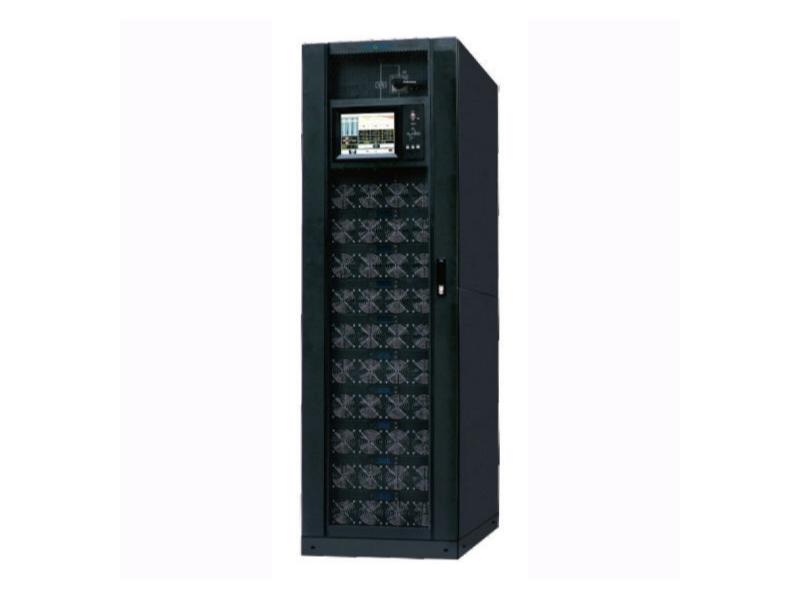
Modular UPS systems are changing what edge computing resilience looks like. They bring together scalable design, built-in redundancy, remote management, and small footprints. The result is rock-solid uptime protection at the edge.
Companies that want reliable power should look at ZLPOWER’s 92M, 93M, and 95M Series Modular Online UPS solutions. These units deliver high-efficiency protection, fast deployment, and long-term adaptability.
Visit ZLPOWER to see the full product line and detailed specs. The company is ISO9001- and ISO14001-certified. Its products ship worldwide, mainly to Europe, the United States, Canada, South Africa, the Middle East, and beyond.
A: A modular UPS is made of separate, hot-swappable power modules. You can add or replace them without shutting anything down. Traditional UPS units are one solid block—you usually have to bypass or replace the whole system to scale or repair.
A: Edge sites face unpredictable loads and few on-site staff. Modular UPS gives pay-as-you-grow scaling, N+X redundancy, and Live Swap hot-swap capability. That means zero downtime during growth or repairs.
A: Absolutely. Models like the 95M Series scale from 40kVA all the way to 1500kVA in parallel. They include smart sleep mode for better efficiency and take up very little space—perfect for growing AI and IoT workloads.
 ChatNow
 Vania
Vania