
When an inverter system provides less backup time than expected, the inverter is not always the problem. The battery bank may be too small for the actual load, connected at the wrong voltage or charged with unsuitable settings. These issues often appear only after installation.
Battery selection should begin with the equipment that must remain online. Its power demand, operating hours and starting current determine how much usable energy is needed. Battery voltage, charge limits and communication compatibility come next.
This guide explains how to size an inverter battery, estimate practical backup time and avoid common matching problems in solar, off-grid and standby power systems.
An inverter battery stores DC energy and supplies it when solar generation or utility power is unavailable. The inverter converts that stored energy into AC power for lighting, office equipment, pumps, communication devices and other loads.
The term may refer to lithium iron phosphate, AGM, gel or another deep-cycle battery. The suitable choice depends on cycling frequency, available space, maintenance access, charging equipment and project budget.
The battery should be selected for repeated charging and discharging. A starter battery is designed mainly for brief, high-current bursts, so it is generally not the right choice for regular solar or backup duty.
Do not start with a battery label such as 100 Ah. Start with the loads.
List every device that must remain powered. Record its running wattage and expected operating time. Motors, pumps, compressors and some tools also have a starting surge. That surge affects inverter selection even when average energy use is moderate.
It is often unnecessary to support an entire building. Essential loads such as lights, routers, security equipment and control systems can be placed on a dedicated backup circuit. This usually reduces battery capacity, cable size and overall cost.
Consider a small office with a 600 W average essential load and a five-hour backup target. The AC energy requirement is:
600 W × 5 hours = 3,000 Wh, or 3 kWh
The battery bank must provide more than 3 kWh because not all nominal capacity is usable. Conversion losses, battery reserve, temperature and future aging must also be considered.
Battery capacity may be shown in amp-hours, watt-hours or kilowatt-hours. Amp-hours alone do not show total stored energy because voltage also matters.
Nominal battery energy (Wh) = battery voltage × amp-hours
A 48 V, 100 Ah battery therefore has:
48 V × 100 Ah = 4,800 Wh, or 4.8 kWh
Next, allow for usable depth of discharge and system efficiency:
Estimated usable AC energy = nominal battery energy × usable depth of discharge × system efficiency
For an example using 80% usable depth of discharge and 90% combined efficiency:
4.8 kWh × 0.80 × 0.90 = 3.46 kWh
These percentages are assumptions, not universal values. The final calculation should follow the selected battery and inverter specifications.
For project sizing, add a safety margin for battery aging, temperature, inverter standby consumption and possible future loads. A design based only on the ideal calculation may deliver less runtime than expected after the system has been in service.
A basic runtime estimate is:
Backup time (hours) = usable AC energy (Wh) ÷ average load (W)
Using the 3.46 kWh example with an 800 W average load:
3,460 Wh ÷ 800 W = about 4.3 hours
This is a planning estimate. Real loads change during operation. A refrigerator cycles on and off. A pump may run only part of the hour but draw a strong surge when it starts. Office equipment may also be added later.
A larger inverter does not automatically provide longer backup. Inverter power determines how much load can be supported. Battery energy determines how long that load can run.
The inverter and battery bank must use the same nominal DC voltage. A 48 V inverter requires a correctly configured 48 V battery bank. The wrong voltage may prevent operation or damage equipment.
Higher-power systems often use 48 V banks because a higher DC voltage reduces current for the same power. Lower current may reduce voltage drop and cable requirements. Final cable selection must still consider current, cable length and applicable electrical standards.
The GS Series 4kW, 5kW and 6kW Hybrid Solar Inverter is offered in 24 V and 48 V DC configurations, depending on the model. It also supports adjustable charging current and MPPT solar charging. The exact battery voltage must be confirmed before ordering rather than assuming that one unit can switch freely between both systems.
Voltage matching is only the first step. The inverter charger must also suit the battery chemistry and charging limits. Important settings include charge voltage, float behavior, maximum charge current and low-voltage cut-off.
Lithium batteries add a battery management system. The BMS monitors and protects the battery against conditions such as overcharge, over-discharge, overcurrent and excessive temperature. Some systems also exchange battery data through CAN or RS485.
The EL Series 48V 50Ah–100Ah lithium battery includes BMS protection, cell monitoring and parallel expansion for solar storage, UPS, telecom and inverter backup applications.
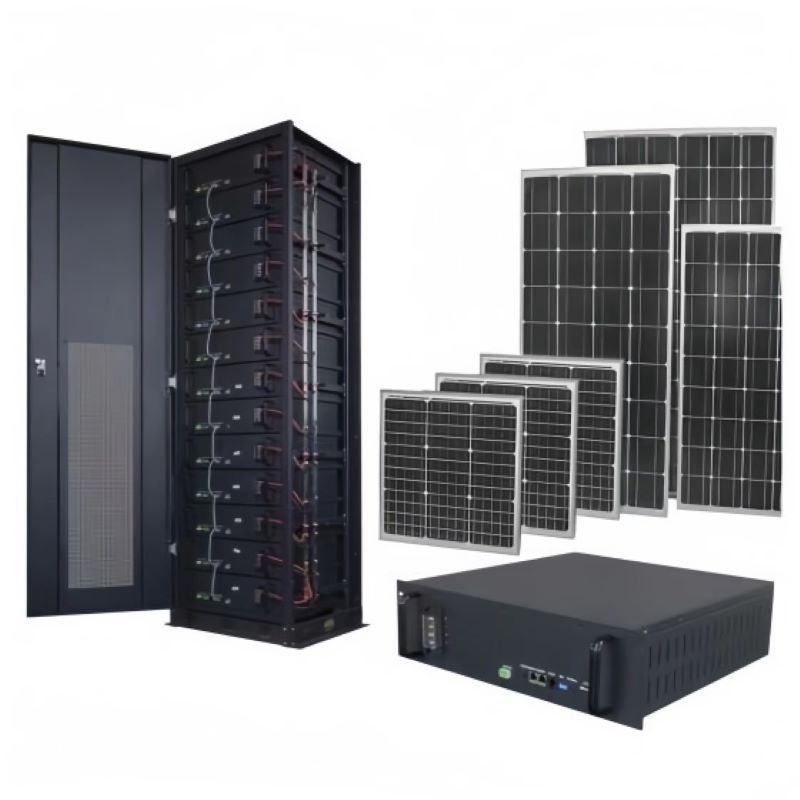
A matching port does not guarantee matching communication. CAN or RS485 compatibility should be confirmed at protocol level before ordering. When communication is not available, charge and discharge limits must still be configured correctly.
A separate inverter and battery bank gives more flexibility. Capacity can be selected around the load, and individual components may be easier to replace or expand. The trade-off is more cabling, more installation work and more compatibility checks.
An integrated system reduces those interfaces. The ZLPOWER all-in-one 5kW hybrid solar inverter with a 5kWh or 10kWh lithium battery combines a pure sine wave hybrid inverter, LiFePO4 storage and BMS communication in one enclosure.
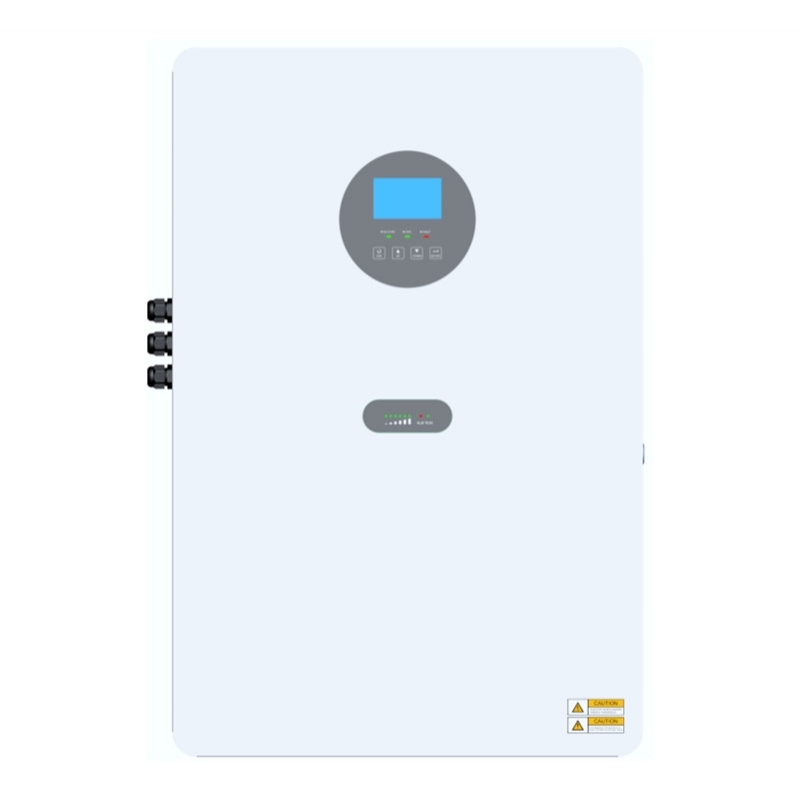
Neither arrangement is automatically better. The decision depends on expansion plans, service access, installation space, transport limits and the technical support available at the site.
Lithium batteries generally provide more usable energy from their nominal capacity and suit frequent cycling. They also require correct BMS and charger settings.
AGM and gel batteries may suit projects with a lower initial budget, established lead-acid charging equipment or infrequent backup duty. They are heavier and usually require a more conservative depth of discharge when service life is a priority.
The selection should reflect how the system will operate:
· Will the battery cycle every day or only during outages?
· Is ventilation or routine maintenance available?
· Will the battery bank need future expansion?
· Can the inverter apply the correct charging profile?
· Is remote monitoring required?
For a deeper look at battery life, the article on 48V 100Ah battery charge cycles explains how cycling conditions affect service life.
|
Mistake |
Likely Result |
Better Approach |
|
Selecting by Ah alone |
Voltage and stored energy are overlooked |
Compare batteries in Wh or kWh |
|
Using peak load as the full runtime load |
The battery bank may be oversized |
Build a realistic operating schedule |
|
Ignoring motor starting current |
The inverter may trip during startup |
Check running and surge power |
|
Treating nominal capacity as fully usable |
Backup time is overstated |
Allow for reserve and conversion losses |
|
Matching voltage only |
Charging or BMS issues may remain |
Confirm chemistry, current and protocol |
|
Adding unmatched batteries |
Uneven current and aging may occur |
Use approved, closely matched modules |
|
Omitting a design margin |
Runtime falls as the system ages |
Allow for temperature, standby use and future loads |
If an installed system will not charge correctly, the guide to common inverter battery charging problems covers battery condition, low voltage, wiring and protection faults.
A useful quotation needs more than an Ah target. Prepare the following information:
· Continuous load and largest starting load
· Required backup time
· Inverter model or required AC output
· Battery-bank voltage
· Solar, grid or generator charging sources
· Preferred battery chemistry
· Installation temperature and available space
· Expected daily cycling frequency
· Expansion and monitoring requirements
These details allow the inverter, charger and battery bank to be reviewed as one system rather than as separate products.
ZLPOWER supports inverter and battery matching for solar, off-grid, UPS and standby power applications. Before model selection, the load profile, battery-bank voltage, charging sources and required backup time can be reviewed together. This helps reduce sizing errors and improves compatibility between the inverter, charger and battery system.
The number depends on inverter DC voltage, required energy and each battery’s voltage and capacity. Series connections increase voltage, while parallel connections increase amp-hour capacity. The final arrangement must remain within inverter and battery limits.
It has 4.8 kWh of nominal energy. With the example assumptions of 80% usable depth of discharge and 90% combined efficiency, about 3.46 kWh may be available to AC loads. At an 800 W average load, the estimated runtime is about 4.3 hours before adding a project safety margin.
No. Battery voltage, charge current, charging limits, low-voltage protection and BMS communication must be compatible. Identical connector types do not prove protocol compatibility.
Not by itself. The inverter rating determines the supported load. The battery bank’s usable energy determines runtime.
ZLPOWER needs the continuous load, starting surge, required backup time, battery voltage, charging sources and installation conditions. Site temperature, daily cycling and expansion plans also help improve the recommendation.
A dependable inverter battery system begins with the load, not the battery label. Running power, starting surge, backup time, battery voltage, usable capacity, charging limits and communication must be checked together.
Careful sizing avoids unnecessary cost and reduces the risk of short runtime, charging faults and early shutdowns. For a project-specific review, request an inverter battery configuration from ZLPOWER.
 ChatNow
 Vania
Vania