
An EPC contractor quoting a 5 kW-class off-grid system may receive three different panel-count suggestions—and all three can look correct on paper. Nine 550 W modules, ten 500 W modules, and eleven 450 W modules each produce an array close to 5 kW. Wattage alone, however, does not confirm a workable PV string.
Before a distributor places a sample or bulk order, the module Voc, Vmp, current, temperature coefficient, and proposed string layout need to match the inverter’s PV input limits. This matters as 450 W to 550 W modules appear more often in commercial quotations.
The examples below use ZLPOWER 5.2 kW and 5.5 kW models, both relevant to the 5 kW-class segment. For EPC contractors and distributors, the key issue is not an exact 5.0 kW nameplate. It is whether the selected module, string layout, and site temperature match the inverter’s PV input limits before quotation and ordering.
For early budgeting, use:
Panel quantity = target PV array power ÷ module rated power
|
Module rating |
Initial panel count |
Nominal array power |
|
400 W |
12 |
4.8 kW |
|
450 W |
11 |
4.95 kW |
|
500 W |
10 |
5.0 kW |
|
550 W |
9 |
4.95 kW |
These figures provide a starting point for a 5kW solar inverter quotation. They do not prove electrical compatibility.
Thirteen 400 W modules produce 5.2 kW, while ten 550 W modules produce 5.5 kW. Either configuration needs an inverter with a permitted PV array rating at or above that power level.
A 5kW solar inverter may accept PV input below, equal to, or above its rated AC output. The two ratings are separate.
The final panel quantity depends on:
· Maximum PV array power
· MPPT operating-voltage range
· Maximum PV open-circuit voltage
· Maximum operating and short-circuit current
· Module temperature coefficients
· Minimum and maximum site temperatures
· Number of MPPT inputs
A general oversizing percentage cannot replace the exact module and inverter datasheets. It may work for one model and fail on the next.
Panels connected in series add voltage. Multiply the module Vmp by the number of modules, then compare the result with the inverter’s MPPT window.
Cold-weather Voc requires a separate calculation. As a hypothetical example, ten modules rated at 49 V Voc already reach 490 V at standard test conditions. Once the local minimum temperature is applied, the string may exceed a 500 V inverter limit.
The cold-corrected string Voc must remain below the inverter’s maximum PV input voltage. At the same time, operating Vmp needs to stay within the MPPT range during hot and cold conditions.
Two modules can both carry a 550 W label and still produce different string results. That small detail gets missed surprisingly often.
Parallel strings increase current rather than voltage. Their combined operating current and short-circuit current need to remain within the inverter’s input limits.
Current also affects:
· DC cable size
· Connectors
· String fuses
· DC isolators
· Combiner boxes
· Surge-protection devices
A solar inverter supplier needs the exact module model before confirming the string design. “Ten 500 W panels” is not enough for final model matching.
Founded in 2007, ZLPOWER develops and manufactures off-grid and hybrid solar inverters for distributors, EPC contractors, system integrators, and OEM buyers.
Project buyers can review the wider ZLPOWER hybrid solar inverter range when comparing output power, PV limits, battery voltage, and operating mode.
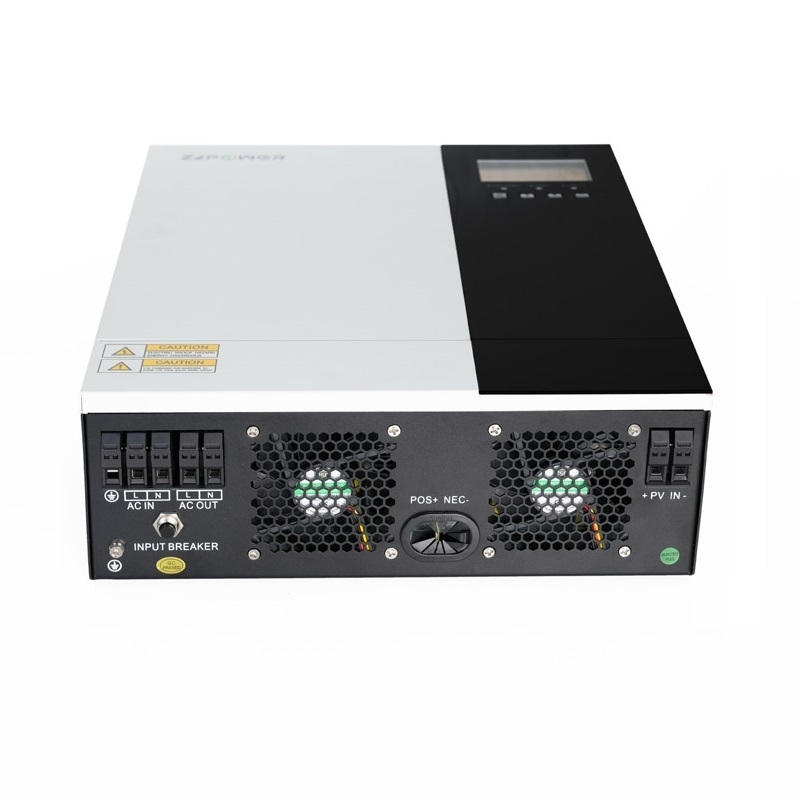
The ZLPOWER PVM5500-48 hybrid solar inverter has a rated output of 5.5 kW and uses a 48 V battery platform. Its maximum PV array power is 5,000 W. The MPPT operating range is 120–450 VDC, maximum PV open-circuit voltage is 500 VDC, and maximum solar charging current is 100 A. The model can also operate without a connected battery.
At the power level, a 5,000 W ceiling can accommodate:
· Ten 500 W modules
· Eleven 450 W modules
· Nine 550 W modules
That does not mean all panels can be placed in one series string. Voc, Vmp, Isc, operating current, and temperature still control the final layout.
The ZLPOWER PVG hybrid solar inverter series includes the 5.2 kW PVG5200-48 and 5.5 kW PVG5500-48. Both use a 48 V battery input and support a maximum PV array power of 5,500 W.
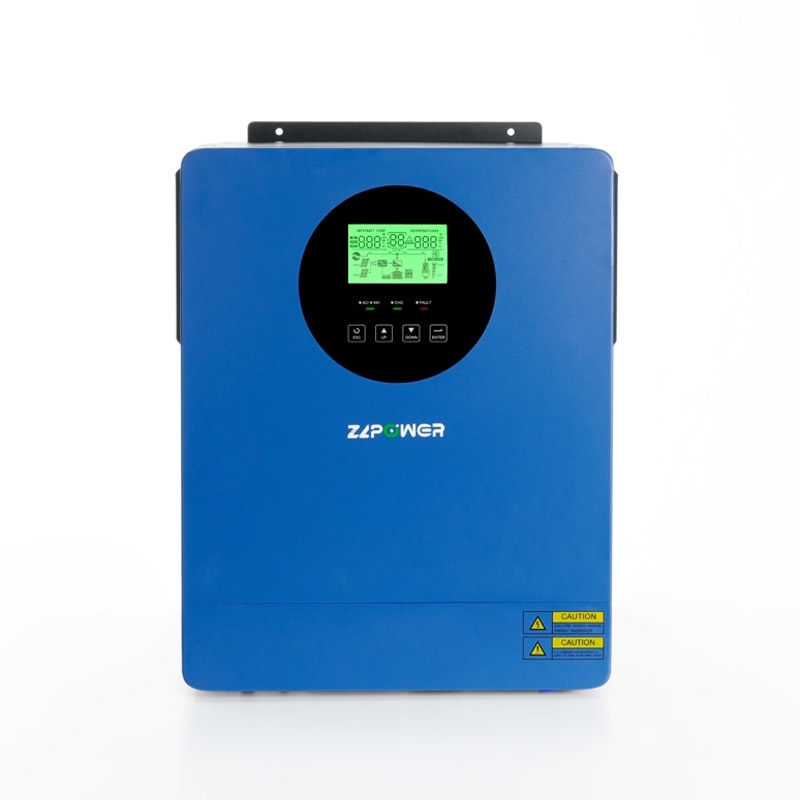
Their MPPT operating range is 120–450 VDC, maximum PV open-circuit voltage is 500 VDC, and maximum solar charging current is 100 A. Battery-independent operation is also available.
Ten 550 W modules reach the 5,500 W power limit. That passes the wattage check only. The proposed string still needs an electrical review.
|
ZLPOWER model |
Rated output |
Maximum PV array |
MPPT range |
Maximum PV Voc |
|
PVM5500-48 |
5.5 kW |
5,000 W |
120–450 VDC |
500 VDC |
|
PVG5200-48 |
5.2 kW |
5,500 W |
120–450 VDC |
500 VDC |
|
PVG5500-48 |
5.5 kW |
5,500 W |
120–450 VDC |
500 VDC |
The model with the largest permitted PV array is not automatically the best purchase. Load profile, battery design, charging demand, communication, installation conditions, and future expansion remain part of the decision.
Daily energy demand determines how much solar generation the project needs. The inverter datasheet then defines how that array can be connected.
Record:
· Continuous and starting loads
· Daily energy consumption
· Required backup time
· Daytime load profile
· Available peak-sun hours
· Planned expansion
A compressor workshop and a telecom site may both use a 5 kW-class inverter. One has a large starting demand; the other may carry a stable load day and night. Same power class, very different job.
For projects still comparing inverter output ratings, ZLPOWER’s B2B inverter capacity selection guide provides a related review of continuous loads, surge demand, and expansion planning.
Collect the module’s:
· Rated power
· Voc and Vmp
· Isc and Imp
· Voc temperature coefficient
· Maximum system voltage
Do not substitute data from a similar product. Even modules from the same wattage class may have different voltage and current values.
Check array wattage against the permitted PV power. Then calculate operating Vmp, cold-corrected Voc, and combined current.
Keep the approved calculation with the technical datasheet, quotation, and purchase order. This reduces disputes during commissioning and makes future module replacement easier.
Provide the solar inverter supplier with:
· Module manufacturer and model
· Voc, Vmp, Isc, and Imp
· Panels per string
· Number of parallel strings
· Minimum and maximum site temperature
· Battery voltage and capacity
· Continuous and starting AC loads
· Required AC voltage and frequency
Include:
· Destination market
· Sample or bulk order quantity
· Required certifications
· OEM or private-label requirements
· Logo and packaging details
· Target production lead time
· Warranty terms
· Spare-parts requirements
· Installer documentation and after-sales needs
Complete project data gives the supplier a firmer basis for model matching, production planning, and quotation. It also cuts down on the email chain, which nobody misses.
· Treating rated AC output as the permitted PV input power
· Selecting modules by wattage without checking Voc and current
· Applying one oversizing ratio to every inverter model
· Ignoring low-temperature voltage correction
· Requesting a quotation without the module datasheet
· Replacing the selected module without recalculating the string
For project buyers, these checks belong in the model-review stage—not after the equipment reaches the installation site.
Nine 550 W panels may be correct for one 5 kW-class project and wrong for another. The answer comes from the module datasheet, cold-corrected Voc, MPPT window, input-current limits, and proposed string layout, not the wattage label alone.
For distributors, EPC contractors, system integrators, and OEM buyers, ZLPOWER can review the panel model, battery specification, site temperature, AC requirements, destination market, and order quantity. Submit the project data to ZLPOWER for model matching, a technical datasheet, production lead-time information, and a commercial quotation from a solar inverter supplier.
A: Nine 550 W panels produce 4.95 kW. Ten panels produce 5.5 kW and require an inverter that permits at least a 5,500 W PV array. Voc, MPPT voltage, input current, and minimum site temperature also need review.
A: Yes, when the exact inverter model permits it. Rated AC output and maximum PV array power are separate values. A general oversizing percentage does not apply to every model.
A: There is no universal MPPT range. The ZLPOWER PVM5500-48, PVG5200-48, and PVG5500-48 use a 120–450 VDC MPPT operating range. The module string must remain within the selected model’s limits across local temperature conditions.
A: Module Voc rises as temperature falls. A string below the inverter limit at standard test conditions may exceed the maximum PV voltage after cold-temperature correction.
A: Provide the module datasheet, proposed string layout, minimum site temperature, battery specification, AC load profile, destination market, order quantity, and OEM requirements. Complete data supports faster model matching and a more accurate quotation.
 ChatNow
 Vania
Vania