
Full inverters and dual inverters have become crucial for current business ventures using solar PV and hybrid energy storage. As more organizations adopt solar PV and hybrid energy storage into their operations, choosing the correct inverter has become a very important decision. This decision may have a considerable effect on the security, efficiency, and overall success of the installation.
ZLPOWER, a prominent manufacturer of inverters and energy storage solutions, develops products that suit the high requirements of business-to-business projects – from industrial plants to hospitals and telecommunications infrastructure. This paper compares these inverter technologies in terms of their differences, safety, reliability, and compatibility with grids. It assists EPCs, business entities, and industries in making an informed decision for their 2026 projects.
Full inverters convert DC electricity from solar panels or batteries into AC power that can supply a wide variety of equipment. ZLPOWER’s full inverters, like the PVX4.0K-6.0K series, deliver pure sine wave output suitable for industrial machinery, office equipment, and standard commercial loads.
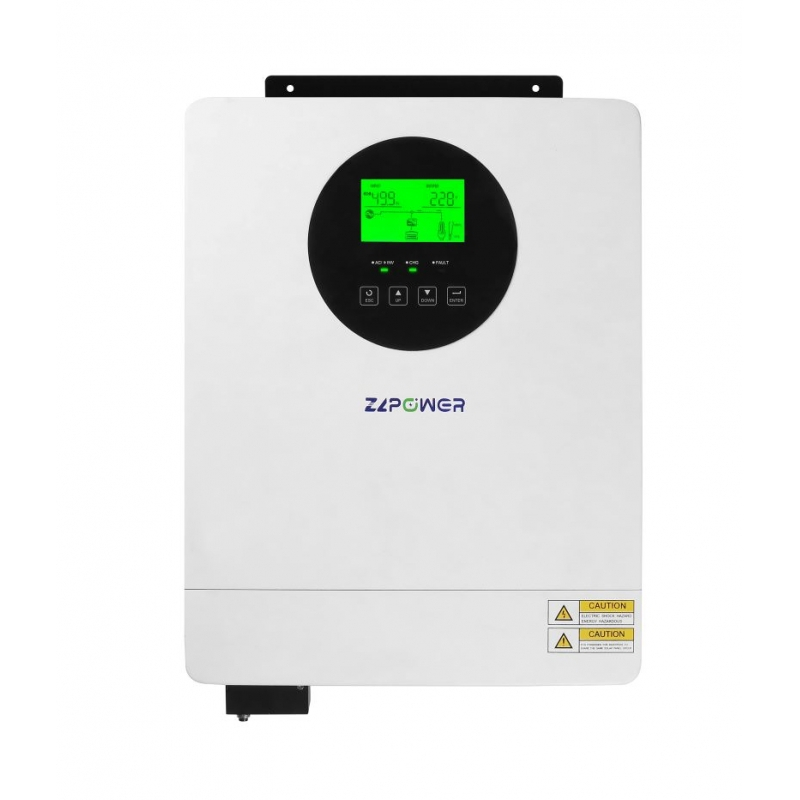
Applications of Full Inverters:
· Commercial PV installations with moderate energy demands
· Industrial sites requiring steady power for standard operations
· Backup systems where a single continuous AC output is sufficient
Advantages:
· Simple design with reliable performance
· Consistent AC output for sensitive devices
· Cost-effective solution for general-purpose commercial energy needs
Full inverters are especially useful when the load is balanced and energy storage is not heavily prioritized. They are often the first choice for small to medium commercial projects where uptime is important but critical load management is not the primary concern.
Dual inverters provide two separate AC outputs simultaneously, allowing one output to supply critical loads while the other serves non-essential equipment. ZLPOWER’s dual inverter models support advanced hybrid energy configurations and large-scale industrial applications.
Benefits of Dual Inverters:
· Prioritized load management reduces downtime for essential systems
· Integration with hybrid solar and energy storage systems
· Flexibility for future expansion and smart energy management
Dual inverters are increasingly used in manufacturing facilities, telecom sites, hospitals, and commercial buildings, where uptime and system resilience are non-negotiable.
For commercial projects, how inverters interact with the grid is a major safety concern. Dual inverters typically provide superior protection against grid fluctuations. They automatically isolate the system during voltage anomalies to protect both equipment and personnel. Full inverters, while reliable, may require external protective devices for similar safeguards.
Dual inverters ensure priority allocation of power supply to important loads, guaranteeing that such loads as data center servers, medical facilities, or manufacturing plants continue receiving power during times of peak power requirements or grid failures. The full inverters produce one output, which will suffice for balanced commercial loads but is not very flexible in high-stakes environments.
Example Table: Full vs Dual Inverter Safety Features
|
Feature |
Full Inverter |
Dual Inverter |
|
Grid synchronization |
Standard |
Advanced with auto isolation |
|
Load prioritization |
No |
Yes, critical vs non-critical |
|
Overload protection |
Basic |
Enhanced, multi-output protection |
|
UPS integration |
Optional |
Built-in capabilities |
|
Emergency power support |
Limited |
Full critical load support |
Consistent Output: Full inverters deliver stable AC voltage with low total harmonic distortion (THD), suitable for industrial motors, pumps, and office electronics.
Redundancy: Dual inverters distribute loads across two outputs, reducing the risk of total system failure. Maintenance or battery replacements can occur without major downtime—a key advantage for high-demand commercial and industrial facilities.
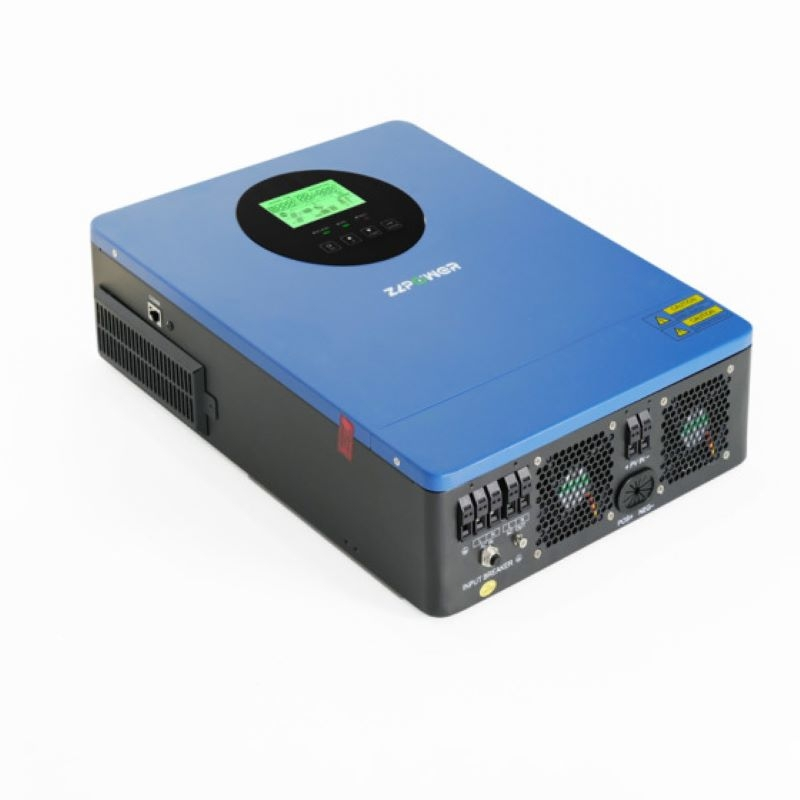
Full inverters work excellently under conventional grid-tie configuration, hence their suitability in commercial applications where there is medium solar power installation. On the other hand, dual inverters suit well hybrid configurations where energy storage and priority switching are needed. ZLPOWER’s hybrid models, like the PVG model, make it possible for the devices to operate smoothly in the combination of solar, battery, and grid power, minimizing any disruptions during operations that need a lot of care.
The industry and remote business centers usually witness voltage variations or brownouts. Dual inverters are capable of stabilizing power, protecting expensive machinery, and ensuring that production continues uninterruptedly, which is very important in industrial plants, telecommunication networks, and hospitals. With their superior MPPT technology and grid integration capability, dual inverters outperform regular full inverters under unstable grid conditions.
Project Considerations:
· Load Type: Full inverters suit general commercial PV installations with evenly distributed loads.
· Critical Loads: Dual inverters excel when certain systems need uninterrupted power.
· Hybrid Storage Integration: Dual inverters integrate seamlessly with lithium battery storage and hybrid configurations, such as ZLPOWER’s all-in-one 5KW inverters with LiFePO4 batteries.
Practical Tip: For a mid-sized factory with a mix of standard equipment and critical machines like CNCs, a dual inverter can prioritize critical loads while still powering non-essential systems efficiently.
ZLPOWER provides a comprehensive range of inverters designed for modern B2B energy needs:
· Pure sine wave output suitable for sensitive commercial and industrial equipment
· Hybrid functionality with advanced MPPT solar charging
· Lithium battery compatibility with high cycle life
· Industrial-grade reliability and certifications for safety and compliance
Whether the project requires a single full inverter for balanced loads or a dual inverter for critical load management and hybrid storage, ZLPOWER products offer tailored solutions.
While full inverters have the benefits of simplicity and stable power output in AC form, making them ideal for any generic commercial application, dual inverters have more strength in being safe, reliable, and grid compatibility. Selecting the right inverter type depends on project scale, load priorities, and integration with energy storage.
For tailored hybrid energy solutions that meet B2B project requirements, ZLPOWER offers a wide range of full and dual inverters. Contact ZLPOWER team today for customized system design and consultation to ensure your project runs smoothly and efficiently.
Q1: What are the differences between full inverters and dual inverters?
A: Full inverters provide a single AC output for general commercial loads, while dual inverters offer two outputs for critical load prioritization and hybrid energy support.
Q2: How do dual inverters improve safety for B2B projects?
A: Dual inverters manage critical and non-critical loads separately, include advanced grid synchronization, and offer enhanced overload protection, improving overall system safety.
Q3: Can full inverters work with hybrid energy storage systems?
A: Yes, full inverters can integrate with battery storage, but dual inverters provide better load management, redundancy, and hybrid energy compatibility.
Q4: Which inverter type is better for industrial facilities with critical machinery?
A: Dual inverters are generally more suitable because they ensure uptime for essential equipment and handle voltage fluctuations more effectively than full inverters.
Q5: How does grid compatibility differ between full and dual inverters?
A: Dual inverters offer superior grid compatibility, especially under weak or variable grid conditions, while full inverters perform best in stable, standard grid environments.
 ChatNow
 Vania
Vania