
That is why inverter selection is now a procurement decision, not just a technical choice. A solar inverter affects PV charging, battery discharge, backup runtime, wiring design, and after-sales satisfaction.
For ZLPOWER buyers, the key choice is often between the PVX dual output inverter and the PVG standard off-grid hybrid inverter. Both support solar storage projects, but they fit different job sites.
Commercial buyers often ask for “backup power,” but the better question is: which loads must stay online during an outage?
Critical loads may include routers, CCTV, control boards, payment terminals, communication devices, medical refrigeration, basic lighting, and office computers. Secondary loads may include fans, decorative lighting, unused sockets, and non-essential appliances.
When all loads draw from the same battery backup system without priority control, stored energy may run out faster than expected. The result can be shorter backup time, larger battery sizing, and more service complaints. In many projects, the battery is blamed first. The real issue is often load planning.
.jpg)
A dual output inverter separates important and unimportant loads. In solar storage projects, this helps reserve limited battery energy for equipment that matters most during a grid failure or weak-grid event.
ZLPOWER’s PVX4.0K-6.0K Off-Grid dual output inverter is designed for this type of application. Its dual output function supports separation between important and unimportant loads for better electrical equipment management. The product also features pure sine wave output, output power factor 1.0, high PV input voltage range, battery independent design, battery equalization function, and a built-in MPPT solar charger.
PVX is more suitable for projects where backup time and load priority matter, such as:
· Telecom backup rooms
· Clinics and small medical sites
· CCTV and security systems
· Remote offices
· Weak-grid commercial buildings
· Small factories with control panels
The main value is controlled backup. Instead of powering everything, the system can reserve battery energy for the loads that keep the business running.
A standard hybrid inverter means a general off-grid hybrid inverter used for common load supply. It combines PV charging, battery charging, inverter output, and AC input management in one device. It does not focus on separating priority and secondary output circuits in the same way a dual output inverter does.
ZLPOWER’s PVG 3.5KW, 5.2KW, and 5.5KW Off Grid Hybrid Solar Inverter is equipped with an MPPT solar charge controller to regulate DC power from the solar array for battery charging. It also includes LCD operation, battery independent design, operation without a connected battery, 208V/220V/230V/240V input and output, and built-in dustproof components.
PVG is a practical choice for simpler solar storage and off-grid power projects, such as:
· Small shops
· Rural offices
· Farm buildings
· Basic backup systems
· Distributor stock programs
· Cost-sensitive off-grid installations
For these projects, easier installation and broad application coverage may matter more than dual output load control.
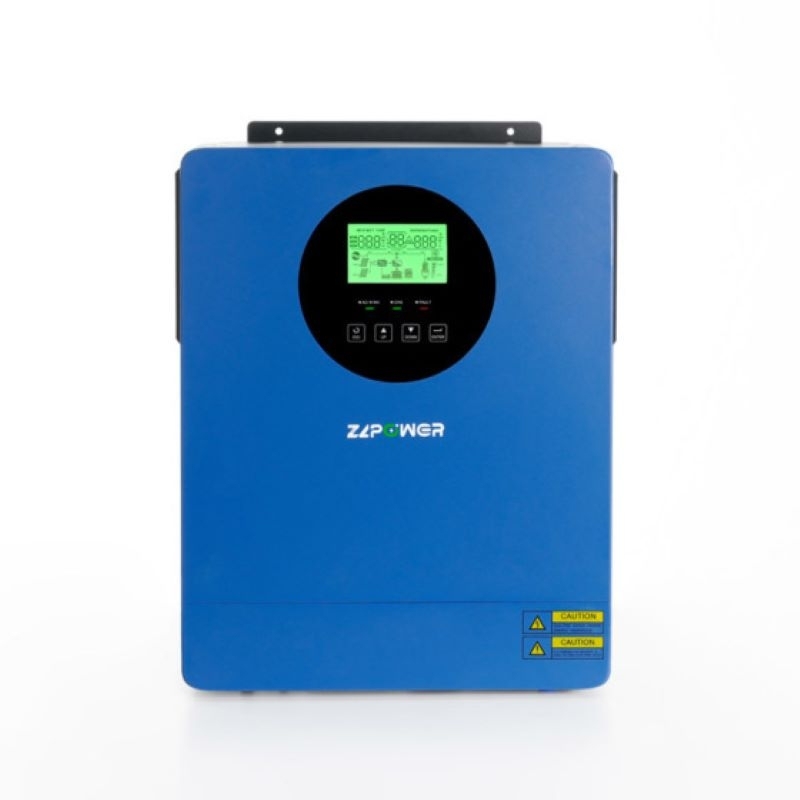
For EPC project buyers evaluating technical configurations, comparing dual output vs. single output inverters provides essential context before finalizing system designs. The following breakdown highlights how the PVX dual output model compares directly with the PVG standard hybrid series:
|
Selection Factor |
PVX Dual Output Inverter |
PVG Standard Hybrid Inverter |
|
Main purpose |
Separates critical and non-critical loads |
Supplies general off-grid and backup loads |
|
Backup control |
Better for priority-load backup |
Better for simpler whole-load systems |
|
Battery use |
Helps reserve energy for key loads |
Battery supports broader connected loads |
|
Installation |
Needs clearer load planning |
Usually simpler for standard projects |
|
Best buyer |
EPC project buyer, C&I installer |
Distributor, installer, small project buyer |
A small warehouse is a common example. CCTV, network equipment, door control, and one office computer may need backup power. Fans, extra lighting, and secondary sockets may not. A dual output inverter fits that situation because the installer can separate critical and non-critical circuits.
In a farm shop with basic lighting, refrigeration, and several small tools, load priority may be simple. A standard hybrid inverter can be enough, with less wiring work and faster setup.
|
ZLPOWER Model |
Best Fit |
Verified Product Points |
|
PVX4.0K-6.0K Off-Grid dual output inverter |
Critical-load backup and weak-grid projects |
Dual output function, pure sine wave output, output power factor 1.0, high PV input voltage range, battery independent design, built-in MPPT solar charger |
|
PVG 3.5KW/5.2KW/5.5KW Off Grid Hybrid Solar Inverter |
Standard off-grid solar storage and distributor stock |
MPPT solar charge controller, LCD operation, battery independent design, 208V/220V/230V/240V input/output, operation without battery |
This product split helps buyers avoid one-model-fits-all mistakes. PVX is stronger for project-based backup systems where critical loads need protection. PVG is better for standard off-grid hybrid inverter demand where simple installation and wider application coverage are more important.
Before selecting a solar inverter, EPC buyers and distributors should confirm the real site conditions, not only the rated power.
Important details include:
· Rated load and surge load
· Critical and non-critical load list
· Required backup time
· Local AC voltage
· PV input plan
· Battery type, capacity, and charging requirements
· Battery-free operation needs
· Installation environment
· Warranty and after-sales support
These details help reduce model mismatch, oversizing, and after-sales pressure.
Dual output inverters and standard hybrid inverters both support solar storage projects, but they serve different B2B needs. A dual output inverter is better suited for critical-load backup, weak-grid sites, and projects where stored battery energy must be reserved for selected equipment. A standard hybrid inverter is better for simpler off-grid and commercial backup systems where general AC power, easier installation, and broad application coverage matter more.
For faster model matching, EPC contractors, distributors, and C&I buyers can prepare the load list, battery type, PV input plan, local AC voltage, installation environment, and required backup time before contacting ZLPOWER. Based on real project conditions, ZLPOWER can help confirm whether PVX, PVG, or another suitable solar inverter model is the better fit for project selection or bulk procurement.
Q1: What is the difference between a dual output inverter and a standard hybrid inverter?
A: A dual output inverter separates critical and non-critical loads, while a standard hybrid inverter usually combines solar input, battery charging, and AC output for general power supply.
Q2: When should an EPC contractor choose a dual output inverter?
A: A dual output inverter is better suited for projects with critical loads, limited battery capacity, unstable grid power, or backup needs for telecom, medical, security, office IT, and control systems.
Q3: When is a standard hybrid inverter enough for a solar storage project?
A: A standard hybrid inverter can be enough for shops, farms, rural offices, and basic off-grid systems where most loads have similar priority and the installation should stay simple.
Q4: Can ZLPOWER PVX and PVG inverters operate without batteries?
A: Selected ZLPOWER PVX and PVG models include battery independent design or battery independent design, allowing operation without a connected battery under suitable solar or AC conditions.
Q5: What information helps ZLPOWER recommend the right solar inverter?
A: Rated load, surge load, local AC voltage, PV input plan, battery type, backup time, critical load list, and installation environment help ZLPOWER recommend PVX, PVG, or another suitable model.
 ChatNow
 Vania
Vania