
Solar and battery buyers are paying closer attention to system architecture in 2026. Rated inverter power still matters, but it is only one part of the purchase. Installation labor, battery expansion, communication compatibility, spare parts, warranty responsibility, and inventory planning can have just as much influence on the final project cost.
The key decision is often whether to purchase an all in one solar inverter with an integrated battery or build the system around a separate hybrid solar inverter and external battery bank.
Neither architecture is automatically better. A standardized distributor package may benefit from integration, while an EPC project with unusual backup requirements may need the freedom of separate components. This guide compares both options for distributors, EPC contractors, system integrators, installers, and OEM buyers.
An all-in-one system combines a solar inverter, a built-in LiFePO4 battery, an integrated battery management system (BMS), and communication interfaces in one coordinated enclosure. The inverter and battery are selected as part of the same product design, so their voltage, charging parameters, and communication arrangement are already defined.
The term “all-in-one” is not a universal technical standard. One product may include a battery, while another may only combine an inverter, MPPT controller, and AC charger. Buyers should confirm the actual system boundary before comparing quotations.
A properly configured all in one solar inverter can reduce external battery wiring and shorten commissioning work. This is useful when installers repeat the same configuration across offices, retail sites, service facilities, or small commercial properties.
For distributors, the integrated design may also reduce the number of inverter-and-battery combinations that must be stocked, documented, and supported.
Common advantages include:
· Fewer separately sourced components
· Predefined inverter-to-battery communication
· Less external DC battery cabling
· A consistent enclosure for OEM and distributor programs
· A more centralized technical-support process
· Simpler installer training for repeat projects
There is a practical benefit here that does not always appear on the quotation sheet. When the inverter, battery, and communication system come from one product platform, field technicians have fewer interfaces to troubleshoot.
Integration can also reduce flexibility. Battery expansion may depend on approved modules, firmware, BMS design, or the physical limits of the enclosure.
Before placing an order, buyers should ask:
· Can battery capacity be expanded later?
· Are additional battery modules field-installable?
· Can the inverter section be replaced separately?
· Can individual battery modules be serviced?
· Does expansion affect warranty coverage?
· Which spare parts should the distributor keep locally?
Shipping and field replacement also deserve attention. A complete integrated cabinet can be heavier than a separate inverter or battery module. That may not matter in a ground-floor installation, but it becomes a real issue at remote sites or buildings with limited access.
A separate system uses an independent inverter and an external battery bank. The inverter rating and storage capacity can be selected separately, giving buyers more freedom to configure the system around the load profile and required backup time.
This architecture is not the same as choosing two products with matching voltage labels. A 48 V inverter and a 48 V battery can still have different charging-current limits, low-voltage thresholds, communication protocols, or firmware requirements.
For buyers comparing broader equipment categories, ZLPOWER’s guide to a hybrid inverter versus an inverter charger also explains how solar charging and source management differ between the two designs.
A separate hybrid solar inverter and battery system gives EPC teams more control over storage capacity, equipment placement, and future expansion.
It may be a better fit when a project needs:
· Several battery-capacity options
· Phased energy-storage expansion
· Independent inverter or battery replacement
· Locally sourced batteries
· Custom battery cabinets
· Different price levels for separate market segments
· Specialized communication or control requirements
Consider two commercial sites that both require a 5 kW inverter. A small office may need four hours of backup for lighting, communications, and computers. A remote service facility may need twelve hours. A separate architecture can address those backup targets without forcing both projects into the same battery package.
The flexibility of separate components comes with additional engineering work. Installers may need more DC cabling, breakers, communication wiring, enclosures, and protection devices.
Before pairing a hybrid solar inverter with an external lithium battery, the application team should confirm:
· Nominal battery voltage
· Continuous and peak discharge current
· Maximum charging current
· Charging and low-voltage settings
· BMS communication protocol
· Firmware compatibility
· Parallel expansion limits
· Cable size and protection requirements
A professional solar inverter supplier should review the proposed combination before shipment. Nominal voltage alone is not an adequate compatibility check.
|
Procurement factor |
All-in-one system |
Separate system |
|
Installation |
Usually less external wiring |
More cabling and setup |
|
Configuration |
More standardized |
More flexible |
|
Battery expansion |
Depends on the model |
Often easier to plan |
|
Inventory |
Fewer system combinations |
More inverter and battery SKUs |
|
Fault isolation |
Follows product-specific procedures |
Components can be tested separately |
|
Shipping |
One heavier package |
Multiple separate packages |
|
Warranty handling |
More centralized |
May involve several suppliers |
|
OEM programs |
Suits repeat product packages |
Suits custom project combinations |
Integrated products can reduce battery-cable routing and communication setup, especially when the same configuration is installed repeatedly.
Still, “all-in-one” does not mean “install without checking.” AC input and output requirements, PV voltage, grounding, circuit protection, ventilation, and operating settings must be reviewed for every site.
Separate systems usually take longer to commission. In return, the installer has greater control over battery placement, storage capacity, and component replacement.
For an integrated system, buyers should confirm whether storage capacity can be increased without replacing the original unit. Approved expansion steps should be documented before the purchase order, not discovered during a later upgrade.
For a separate system, warranty responsibility needs equally careful attention. When equipment comes from different suppliers, buyers should define who handles inverter faults, battery faults, and communication failures.
A lower initial price can look less attractive after the first complex field-service case. Distributors should request a written spare-parts policy, replacement procedure, technical escalation route, and warranty allocation before launching either architecture in a new market.
An integrated product may be more practical for distributors that want standardized packages, consistent branding, fewer product combinations, and simpler installer training.
A separate system may suit distributors that need several storage capacities, local battery sourcing, wider pricing options, or independent spare parts.
OEM buyers should also compare:
· Enclosure and color customization
· Logo and packaging options
· Display language
· Communication interfaces
· Certification scope
· Minimum order quantity
· Sample and pilot-order availability
Integrated systems are often suitable for repeat installations with predictable loads and backup requirements.
Separate components may be more appropriate for phased projects, unusually long backup times, existing battery installations, specialized control systems, or sites where individual components must be replaced without removing the complete system.
The project pipeline should guide the decision. One successful demonstration installation does not define the best architecture for every future customer.
As a solar inverter manufacturer, ZLPOWER develops inverter and energy-storage products for project, distributor, and customization requirements. The company has operated since 2007 and offers both integrated storage products and separately selected inverter and battery equipment.
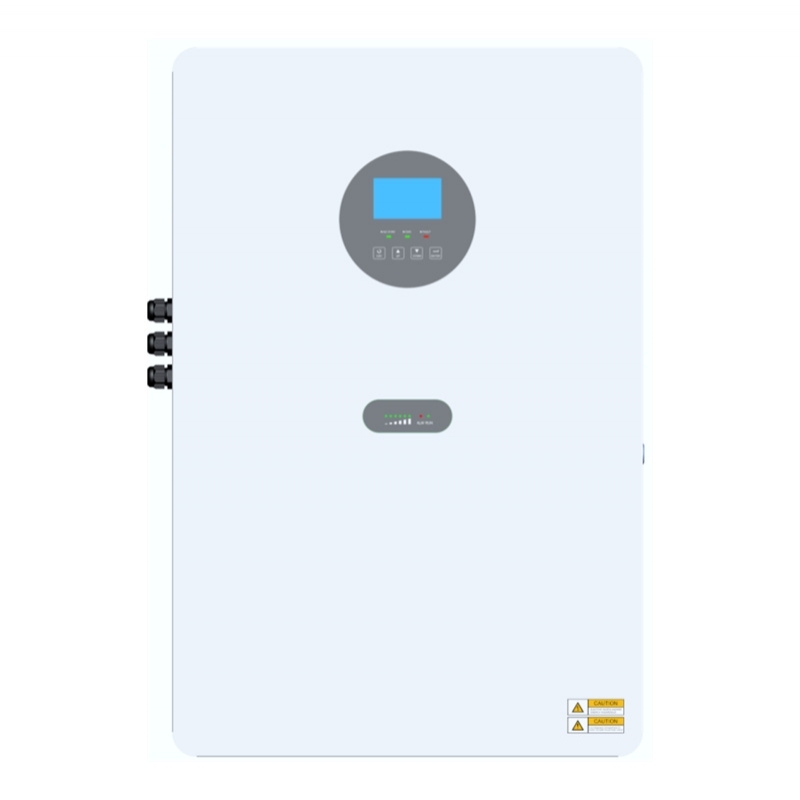
The ZLPOWER all-in-one hybrid solar inverter with lithium battery combines a pure sine wave inverter, lithium battery, BMS, and communication interfaces in one enclosure.
Its published specification table includes:
· A 3 kW inverter with 2.56 kWh battery storage
· A 5 kW inverter with 5 kWh battery storage
The product also provides configurable battery-charging current, configurable AC or solar charging priority, RS485 and CAN communication, and overload, overtemperature, and short-circuit protection.
This all in one solar inverter format may suit standardized packages for offices, small retail sites, service facilities, and distributor programs. Buyers should still confirm usable battery capacity, PV input range, output requirements, environmental conditions, and future expansion plans before ordering.
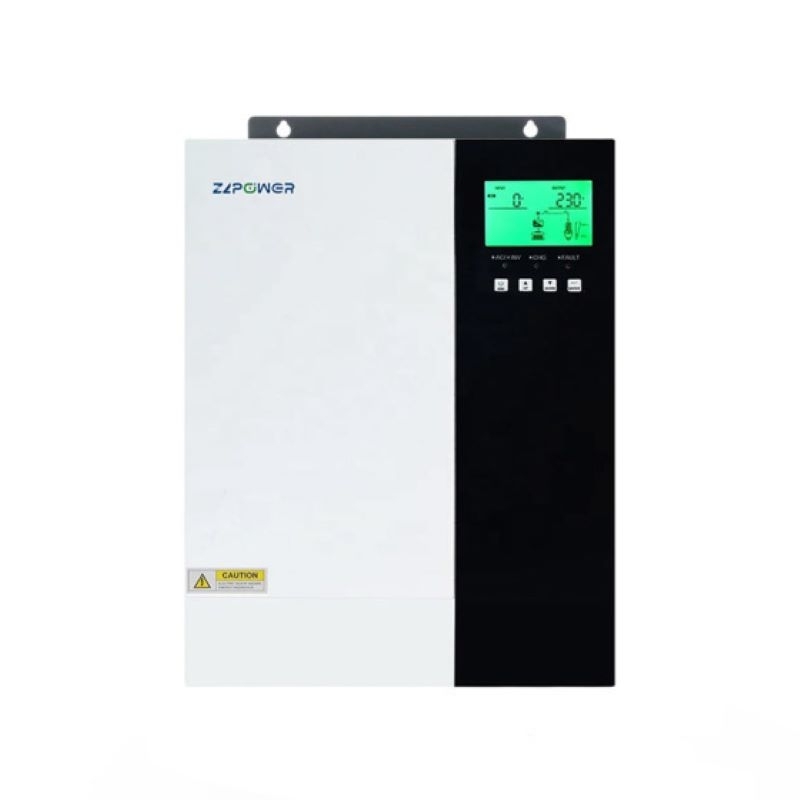
The ZLPOWER PVM hybrid solar inverter is offered in 3.5 kW, 4 kW, 5.5 kW, and 6 kW versions.
The product page lists pure sine wave output, a built-in 100 A MPPT solar charger, user-configurable battery-charging current and AC or solar priority, and dual outputs for separating critical and non-critical loads.
The dual-output function supports the separation of critical and non-critical loads for more structured load management.
The separate ZLPOWER EL 48 V lithium battery series covers capacities from 50 Ah to 100 Ah.
Its BMS provides overcharge, over-discharge, overcurrent, overtemperature, and short-circuit protection. The published product information also lists intelligent cell monitoring and support for up to 15 battery units in parallel.
The PVM inverter and EL battery illustrate the flexibility of separate sourcing, but they should not be presented as a confirmed pair without model-specific review. Application engineers should check voltage, charging current, discharge requirements, BMS communication, firmware, and parallel configuration for each proposed system.
Product specifications and compatibility may vary by model and project configuration.
Once the system architecture has been selected, the next step is to convert that decision into a complete technical and commercial RFQ.
Provide the supplier with:
· Continuous load and peak starting demand
· Required backup time
· PV array capacity and voltage
· Required usable battery capacity
· Maximum charge and discharge current
· AC input and output voltage
· Frequency and phase requirements
· Communication protocol
· Planned battery expansion
· Installation temperature and environment
A qualified solar inverter supplier should also clarify:
· Minimum order quantity
· Sample availability
· Production lead time
· Warranty allocation
· Spare-parts availability
· OEM logo and packaging options
· Destination-market certifications
· Installer training
· After-sales response procedures
Complete project information produces a more useful quotation than requesting equipment by inverter power alone.
An all in one solar inverter may be the stronger choice for standardized packages, shorter installation schedules, consistent branding, and a centralized support process. A separate inverter-and-battery system provides greater freedom in storage sizing, phased expansion, component replacement, and market-specific sourcing.
ZLPOWER supports both procurement approaches. Buyers can contact ZLPOWER for a project quotation and submit the required inverter power, load profile, backup-time target, PV specifications, installation conditions, order quantity, destination market, and OEM requirements for a model recommendation and compatibility review.
A: An all-in-one product combines the inverter, battery, BMS, and communication interfaces in one enclosure. A separate system allows the inverter and battery to be selected, installed, expanded, and replaced independently.
A: An integrated system may suit repeat installations and standardized product packages. Separate components are often more practical when projects require custom battery capacity, phased expansion, specialized controls, or independent component replacement.
A: Expansion depends on the model, BMS design, approved battery modules, firmware, and manufacturer limits. Buyers should confirm the maximum supported configuration and expansion procedure before placing the original order.
A: Buyers should check nominal voltage, charging and discharging current, low-voltage limits, charging parameters, BMS communication, firmware compatibility, cable requirements, and parallel expansion limits.
A: Separate systems usually allow the inverter or battery to be replaced individually. Integrated systems may provide a more centralized support process, but actual serviceability depends on the internal design, spare-parts policy, field-replacement procedure, and warranty terms.
 ChatNow
 Vania
Vania