
When picking an off-grid inverter, begin by checking your solar project‘s full power needs. The inverter needs to deal with steady and peak loads from every attached device. For example, home systems might call for 3.5 kW to 10 kW based on power use. The PVG 3.5KW 5.2KW 5.5KW Off Grid Hybrid Solar Inverter from ZLPOWER has an MPPT solar charge controller. This tool boosts and controls DC power from the solar panels to charge the battery bank. It shows that the inverter‘s power should fit the solar panel output and the load needs.
Matching your solar panels and battery setup is a key point. Lots of current off-grid inverters include built-in Maximum Power Point Tracking (MPPT) controllers. These help get the most energy from solar panels. The PVM Plus is a third-generation off-grid inverter with plenty of new features. Its build lets it connect easily with different battery types, such as lithium-ion and AGM batteries. This keeps the system flexible.
Efficiency scores matter a lot for total output. Strong-efficiency inverters cut down on losses when turning DC to AC. This has a direct impact on the energy you can use. The EX6K-EX10KL high-frequency online UPS is a solid product line with good versatility and ease. It uses advanced digital control tech, the DSP (Digital Signal Processor). This kind of control improves efficiency and steadiness. It suits systems where trust is important.
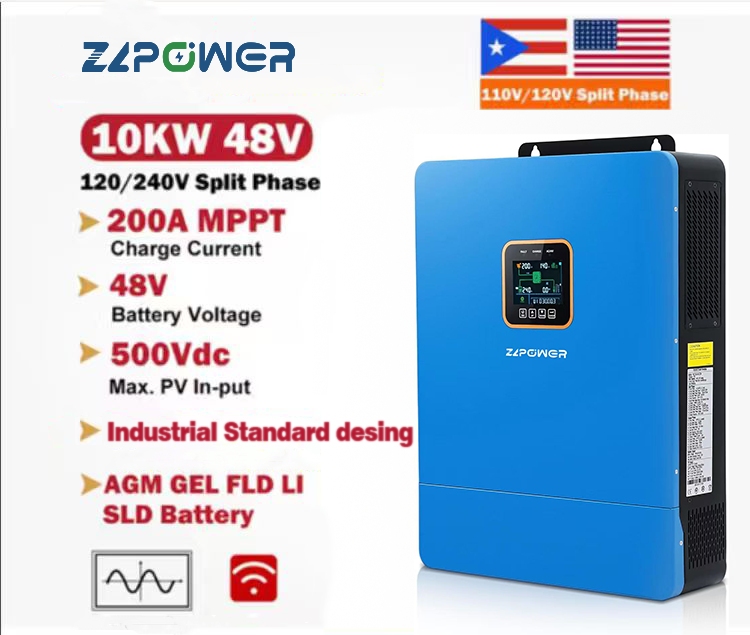
Various inverter types—hybrid, string, and microinverters—bring different perks based on project size and setup. Hybrid inverters mix traits from grid-tied and off-grid systems. They allow varied running ways during power failures or in out-of-the-way spots. This hybrid 3.5KW, 4KW, 5.5KW, and 6KW solar inverter/charger from ZLPOWER joins the roles of an inverter, solar charger, and battery charger. It gives steady power in a handy package. This range makes hybrid models good for home systems wanting some freedom from the grid.
String inverters save costs for big systems. But they count on even panel work. Shade or mismatches can drop efficiency for the whole group. Microinverters run at the panel level. They boost output in changing weather. However, they add to setup expenses.
For complete standalone off-grid systems in far areas, a hybrid inverter or standalone pure sine wave inverter is usually picked. They provide steady voltage that works with delicate electronics.
A pure off-grid inverter‘s main task is to turn direct current (DC) from solar panels or batteries into alternating current (AC) for regular devices. The solar inverter, with its dependable smart design, can deliver steady AC output. It does this even when weather shifts.
Linking with battery storage makes sure of nonstop power at night or on cloudy days. The battery-independent design lets this inverter work without a battery attached. Such options let users adjust their systems to what they have. At the same time, they keep things running reliably.
Steady checks help keep peak efficiency and spot early problems. Newer models have LCD screens built in. These show voltage, load info, and error codes for quick fixes. Its full LCD display gives user-set options and simple button use. Remote links like RS232 or Wi-Fi modules make upkeep simpler. They allow watching from phones or computers.
Regular looks should check wire links, air space, and software updates. This keeps output steady over time.
Getting the right size for your off-grid inverter means adding up power from all linked devices. You also need to include peak loads from motors or compressors. For example, fridges or pumps might need three times their usual power to start.
The GS 8kw-12kw 48VDC to 220VAC hybrid solar inverter from ZLPOWER is made for both inductive and resistive loads. This lets such models manage lights and air conditioners well.
To find the right capacity:
1. List all devices‘ power.
2. Multiply the total by a safety add-on (often 1.25–1.5 times).
3. Pick an inverter that goes over this a bit for growth or busy times.
Exact sizing keeps the system steady. It stops overloads that could hurt gear or cut its life.
Off-grid inverters offer total energy freedom by cutting out utility grid dependence. This fits rural spots or places with common outages. They let homes or businesses make and store their own power from green sources.
Energy storage has a longer cycle life. It reaches up to 3,500 cycles, five times more than standard lead-acid batteries. Matching these long-lasting batteries with good off-grid inverters boosts trust over long stretches. It also lowers upkeep costs.
Plus, these systems give flexibility. They back different setups—from tiny cabins to big farms. They can add in other sources like wind turbines with solar panels.
Even with their upsides, off-grid systems cost more at the start. This comes from extra parts like batteries and charge controllers. Setup can be complex. It may need pro help for right setup.
Growth can be limited next to grid-tied systems. Adding power often means updating batteries and inverters together.
Boosting output starts with good setup steps. Make sure there is enough air around the unit. This avoids overheating that wears parts too soon. Keep cables short to cut voltage loss between panels, batteries, and inverter ends.
The Pure Sine Wave Inverter Charger 1KVA-12KVA from ZLPOWER has an LCD digital display. Such pure sine wave inverter designs better fit sensitive electronics. They keep high shift accuracy under changing loads. For bigger needs, a 10kW inverter like those in the EX6K-EX10KL range from ZLPOWER handles heavy demands reliably.
Maker-provided software updates often add better steps. These improve MPPT tracking sharpness or charging output. So, keeping software fresh gets the most value long-term.
Steady upkeep—including clearing dust from fans and checking software soundness—keeps running smooth. This works even in tough weather common in far setups where trust counts most.
By looking closely at these tech points when choosing an off-grid inverter—power fit, match checks, output boosts—you can make a solid solar system. It will bring lasting power where it‘s needed.
A pure off-grid inverter works only with solar and batteries for standalone power, without grid ties. A hybrid inverter can switch between off-grid and grid modes for more flexibility. Both ensure reliable energy, but hybrids like the PVG series from ZLPOWER suit partial grid users.
A pure sine wave inverter outputs smooth AC power like the grid, preventing damage to devices like computers or medical equipment. This makes it essential for off-grid setups. Models such as the Pure Sine Wave Inverter Charger 1KVA-12KVA from ZLPOWER provide this clean power reliably.
A 10kW inverter handles high power loads with MPPT controllers and surge capacity. It supports battery storage for continuous supply. The EX6K-EX10KL from ZLPOWER offers these for demanding projects, ensuring efficiency and stability.
 ChatNow
 Vania
Vania